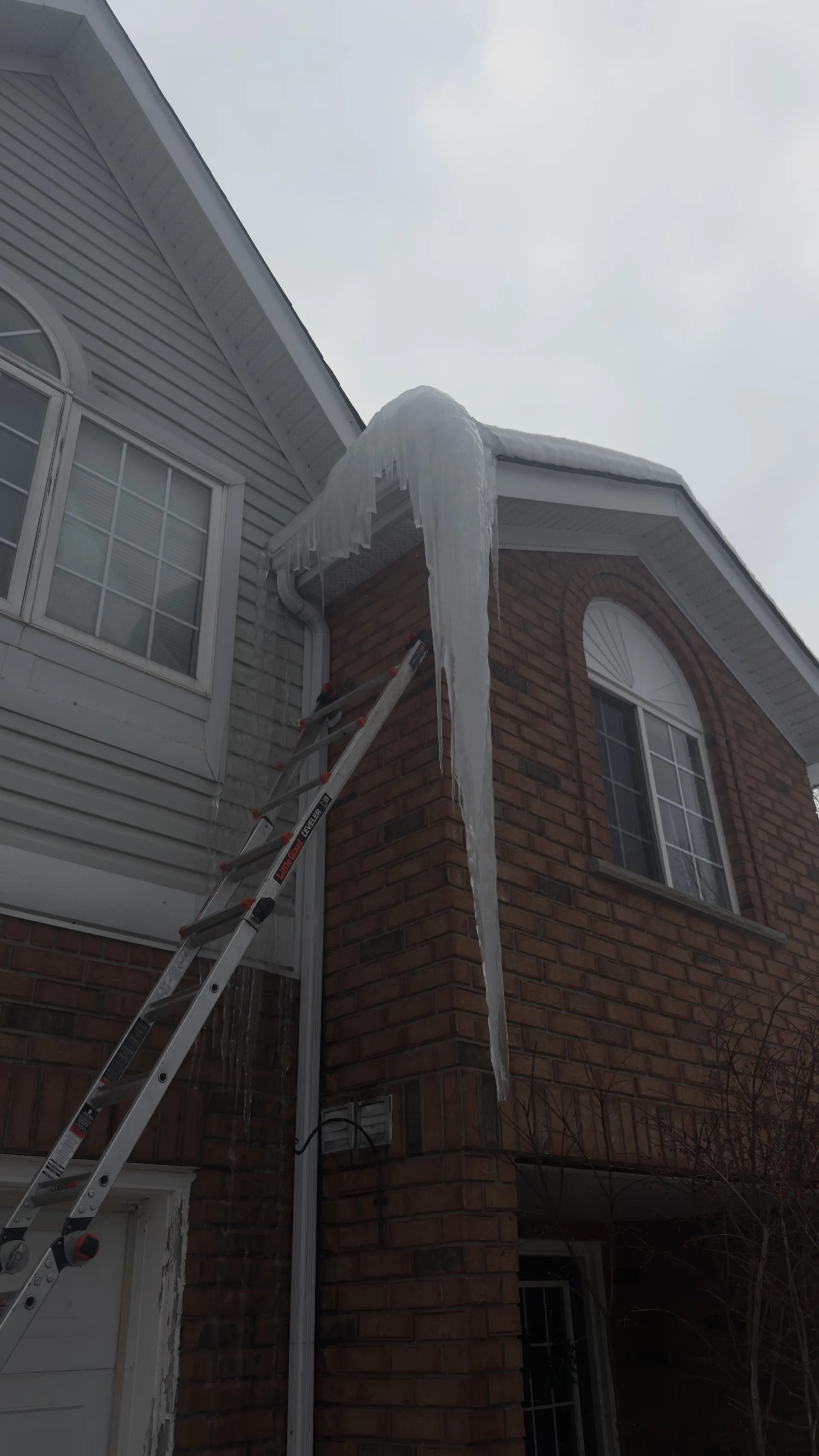
Rock salt and calcium chloride melt ice, while sand only adds grip, and that difference decides which one suits your driveway, your budget and your surface. This comparison covers cold limits, cost, damage to concrete and interlock, and a clear guide to choosing.
In This Article
Melting versus grip: two different jobs
Rock salt is sodium chloride. Calcium chloride is a different salt. Both lower the freezing point of water, so ice turns to brine, and both need a little moisture and some time to work. Calcium chloride also gives off heat as it dissolves, which is why it starts faster.
Sand does not melt anything. It roughens the surface so that boots and tires bite. That makes it useful at any temperature and leaves the ice in place. Many people mix sand with a little salt to get some of each.
The three side by side
| Rock salt | Calcium chloride | Sand | |
|---|---|---|---|
| What it does | Melts ice into brine | Melts ice, and warms as it dissolves | Adds grip only |
| Cold performance | Good near freezing and slower as it gets colder. Labels often put the practical limit around -10°C | Labels commonly rate it to roughly -25°C or colder | Works at any temperature, but nothing melts |
| Speed | Moderate | Fast | Immediate grip |
| Cost per bag | Lowest of the two melters | Highest of the three | Low, though you use more and must sweep it up |
| Concrete and interlock | Feeds freeze-thaw scaling. Go light | Same warning, and it can leave a damp residue | No chemical harm, but it needs sweeping |
| Plants and pets | Burns plants at high doses and irritates paws | Same concerns, and it can irritate skin on contact | Mostly harmless, but it tracks indoors and clogs drains |
Temperature limits vary by product and by how the label was tested, so read the bag you buy.
Want your driveway cleared before 7am?
Seasonal snow removal for homes across Kitchener, Waterloo, Cambridge & Guelph, so winter mornings take care of themselves. Free, no-obligation quotes, ready within 1 business day.
What each one does to concrete, interlock and asphalt
- Poured concrete: the main risk is scaling. Salty water soaks into the surface, freezes, expands and pops off the top layer. Young concrete is the most vulnerable, and many installers advise skipping de-icers on it in its first winter, so ask yours. Sealed concrete resists better.
- Interlock pavers: they scale in the same way, and joint sand gets washed out by meltwater and scraped out by metal blades. Use a plastic-edged shovel, and top up the joints in spring. The guide to cleaning interlock paving covers the spring routine.
- Asphalt: salt matters less than water freezing in cracks, so a sound surface helps. Sand is harmless to it.
- Avoid fertilizer-type products. Ammonium nitrate and ammonium sulfate are known to attack concrete, and they are not good de-icers anyway.
Choose rock salt, calcium chloride or sand
Choose rock salt if:
- Temperatures hover near or just below freezing.
- You have a large area and a tight budget.
- The concrete is mature, and you will spread thinly and sweep up what is left.
Choose calcium chloride if:
- It is cold enough that rock salt stalls.
- The area is small and critical, such as steps, a ramp or a slope, and speed matters.
- You accept the higher cost and will wear gloves.
Choose sand if:
- It is too cold for anything to melt, and you need grip now.
- You are working near garden beds, lawn edges, new concrete or pavers you want to protect.
- You are willing to sweep it up in spring.
A sand-and-salt mix trades some melting for grip and puts less chloride on the surface.
Habits that protect the surface, whatever you choose
- Shovel first. De-icers work on thin ice, not through a layer of packed snow.
- Spread thin. The surface should look lightly dusted, not white.
- Wait. Give the product time before adding more.
- Scrape and sweep. Push the slush off, sweep up what is left, and rinse in spring.
- Store it dry. Calcium chloride pulls moisture from the air, so keep it sealed and away from metal.
- Read the label, wear gloves and keep it off plants and away from pets.
There is a reason beyond your own surface to spread less. Chloride does not break down, and it is not filtered out. What you put down eventually washes into soil, storm drains and local streams, so the smallest amount that works is also the kinder amount.
If you hand the work to a contractor, ask which de-icer they spread on your surface. D&D Home Services offers snow removal from $80 per visit for typical Kitchener-Waterloo homes. For more choices, read about salt alternatives for ice and driveways.
Key Takeaways
- Rock salt and calcium chloride melt ice, and sand only adds grip, so the right pick depends on temperature and surface.
- Labels often limit rock salt to around -10°C, while calcium chloride keeps working in much colder weather.
- Every chloride de-icer can worsen freeze-thaw scaling on concrete and interlock, so shovel first and spread thinly.
- Avoid fertilizer-type products such as ammonium nitrate or sulfate, and keep any de-icer off new concrete.

Request a home-service quote
Select the service you need and describe the work area and access.