Tool types matter more than brand names, and they change far more slowly. This 2026 guide compares the main ways to clear an eavestrough, shows what each does well and where it fails, and helps you pick one for your debris and your house.
In This Article
Spend on the ladder kit before any gadget
The gear that matters most is the gear that keeps you steady. A ladder whose duty rating covers you plus your tools comes first. Add a standoff so the rails miss the trough, a bucket with a rung hook, cut-resistant gloves and safety glasses. A tarp under the work area speeds cleanup and protects the beds below. If you buy nothing else, buy these, and read ladder safety for exterior home maintenance before you set up.
Six gutter tool types compared
| Tool type | Works well for | Where it falls short |
|---|---|---|
| Plastic scoop and hooked bucket | Wet, packed leaf mulch, seed pods and roof grit, and you see every fault in the trough | Slowest option, with the most time on the ladder |
| Garden hose with a jet nozzle | Flushing loosened debris and proving the downspouts run | Cannot lift packed muck, and can push it into the downspout |
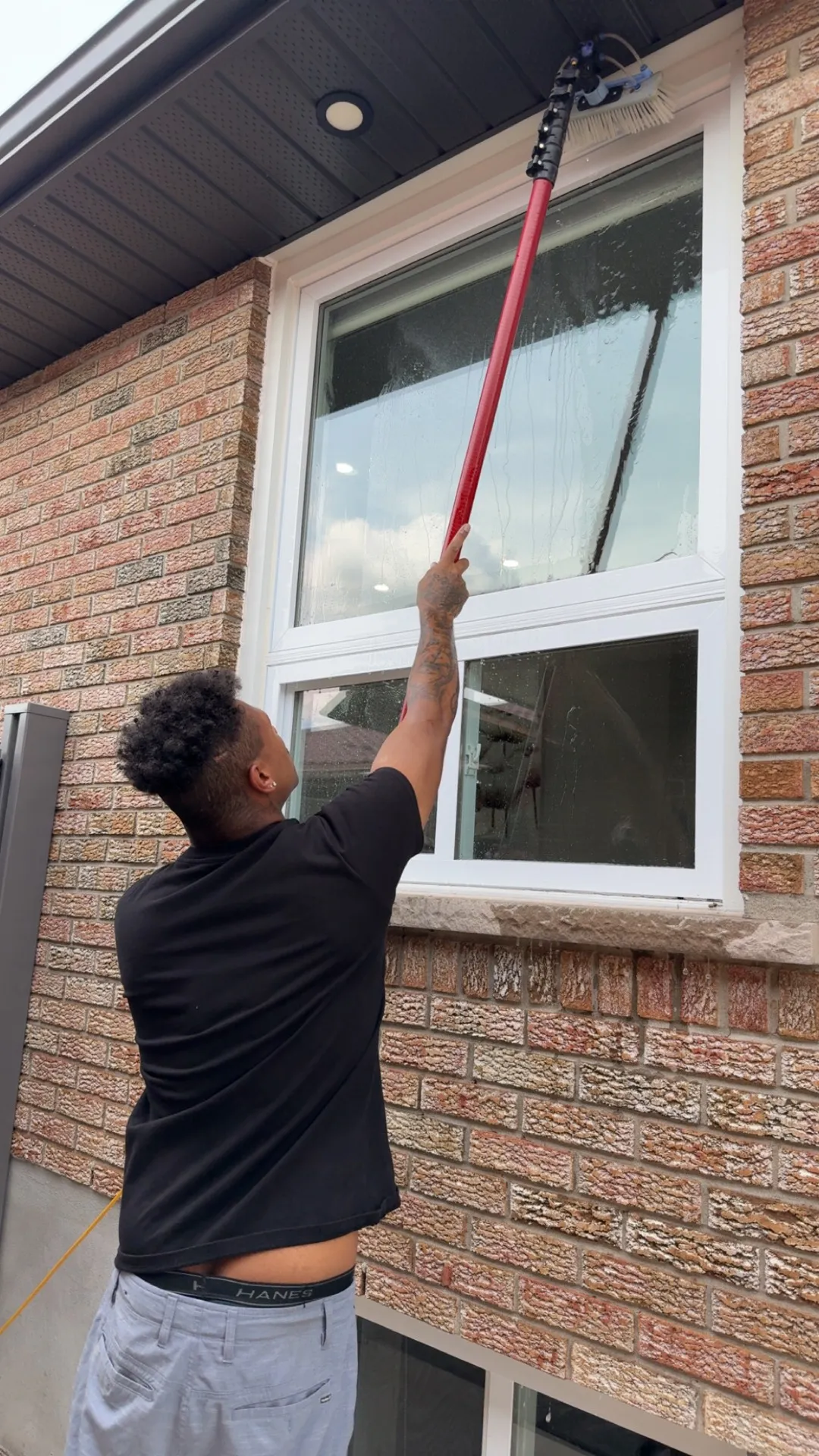
| Pole tool (hose-fed wand or scoop head) | Light, loose debris on a low eave, such as maple seed pods in late spring | You cannot see into the trough, and long poles flex and drop debris on siding and windows |
| Leaf blower with a gutter attachment | Dry leaves in early fall, if you already own the blower | Useless on wet mats, throws dust and grit, awkward to hold one-handed on a ladder |
| Wet/dry vacuum with extension tubes | Dry leaves and grit with less airborne mess | Wet leaves clog the hose, it is heavy to hold overhead, and it needs power at the base |
| Soft brush on a pole with a gutter-safe cleaner | The dirt film on the outside face of the trough, used as the product label directs | Plain soap may not shift dark streaks (see black streaks on gutters), it does nothing for debris inside, and abrasive pads can dull the finish |
Before buying any of them, check three things. First, the trough width: residential runs commonly measure 125 or 150 mm (5 or 6 inch), and a scoop or wand head has to fit. Second, the weight at full reach: overhead work tires your arms faster than you expect, and tired people overreach. Third, how the tool copes with wet debris, because November muck usually is.
Gutters overflowing, or overdue for a clean?
We clean and flush gutters across Kitchener, Waterloo, Cambridge & Guelph, and catch small problems before they reach your foundation. Free, no-obligation quotes, ready within 1 business day.
Match the tool to the debris and the house
Two questions decide it: what is in the trough, and how high the eave sits.
- Choose a scoop and bucket if the debris is wet, black and packed, which is typical in November, or if the trough holds roof grit. It is slow, but you see and feel everything you remove.
- Choose a blower or a wet/dry vacuum if the leaves are dry and plentiful, for example after a dry stretch in October. You trade speed for noise, dust and a cord.
- Choose a pole tool for a light dusting of seed pods on a single-storey eave, and expect a follow-up look from the ladder.
- Choose the hose and jet nozzle every time, as the final step. Water that runs clear out of each downspout is the only real proof the job is done.
For most single-storey homes, the ladder kit, a scoop with a bucket and a hose cover the whole job. The scoop, bucket and hose are also the cheapest tools here. A blower or vacuum only earns its place if you already own one for other work.
Finish by looking, not guessing. A thin layer of leftover muck can be enough for maple seedlings to sprout in a trough by early summer, so check each run once the water has stopped.
Cold, cords and noise: Canadian conditions
Late-season jobs bring conditions that tool reviews skip. Battery tools lose runtime in the cold, so keep spares indoors until you need them. For corded tools, the Electrical Safety Authority advises a heavy-duty, outdoor-rated, three-prong extension cord plugged into a ground fault circuit interrupter (GFCI) outlet, never a string of cords joined together. It also advises electric tools that carry a recognized Canadian approval mark. Keep the cord away from the base of the ladder.
Check your municipality's current noise rules before you run a blower early in the morning. Wear gloves that resist cuts yet still let you feel a screw head, since thick winter mitts fumble. Drain and store hoses after the last flush, before hard frost.
Tools to skip, and when a crew is the right tool
Skip the pressure washer. It throws muck across siding and windows and can push water behind the fascia. Skip metal trowels and wire brushes too, which scratch the finish.
Some jobs need a crew, not a tool: second-storey eaves, uneven ground, wires near the run, or nobody to steady the ladder. If you hand it over, ask for a written quote for gutter cleaning before any work starts. D&D Home Services gives free quotes and confirms them in writing. To set that price against your own time and gear, read professional vs DIY gutter cleaning costs.
Key Takeaways
- Buy the ladder standoff, hooked bucket, gloves and eye protection before any gadget.
- A plastic scoop still handles the wet, packed debris that blowers, wands and vacuums leave behind.
- Blowers, vacuums and pole tools suit dry, loose debris: early-fall leaves or late-spring maple seed pods.
- In the cold, keep batteries warm, plug cords into GFCI outlets and drain hoses after the last flush.
Sources & References

Request a home-service quote
Select the service you need and describe the work area and access.