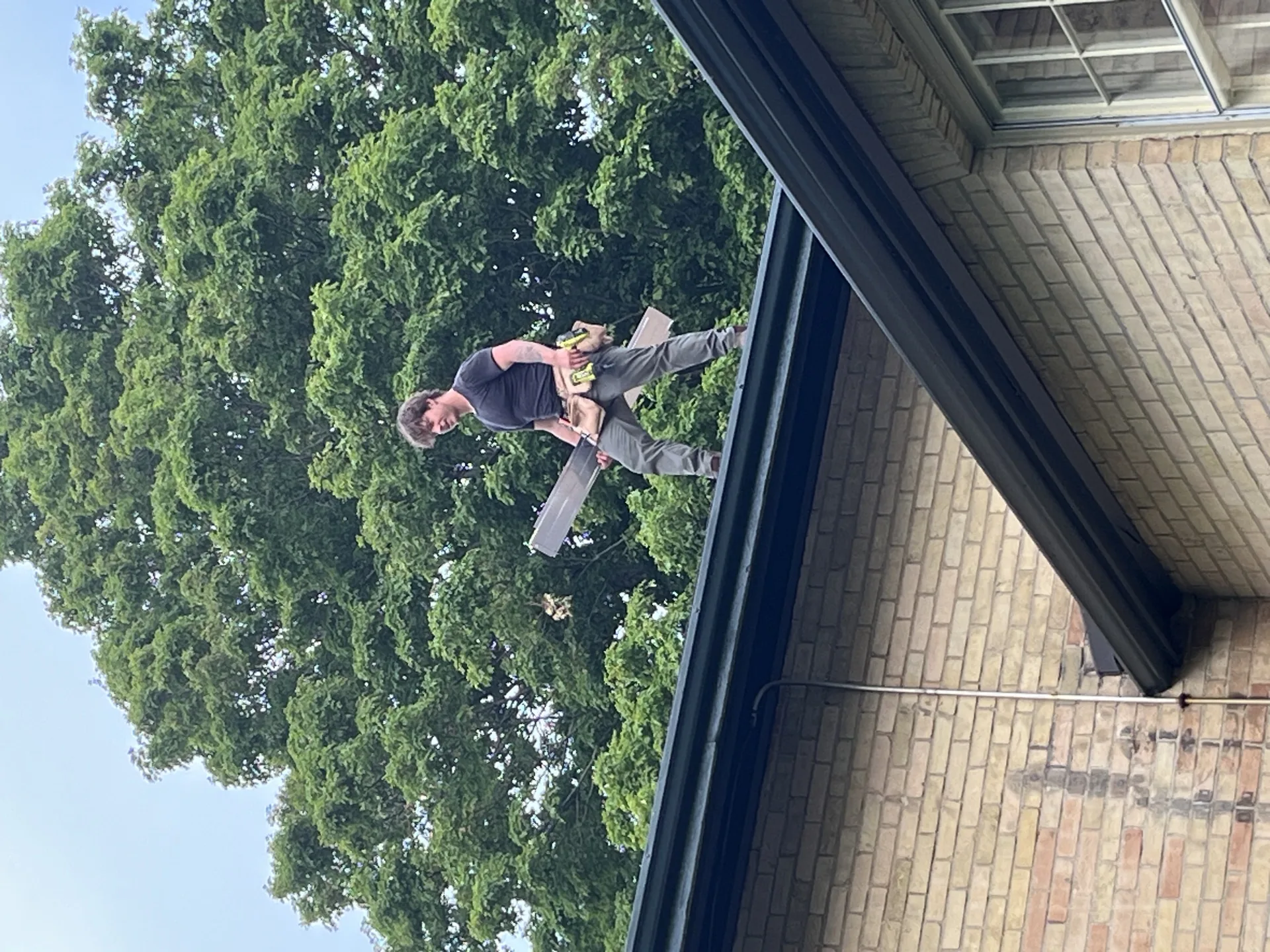
Snap-in guards are sold as the easy option, and the snapping itself often is. The hard parts are everything around it. Here is an honest look at what is easy, what is not and how to decide before you buy.
In This Article
What "snap-in" usually means
"Snap-in" is a sales term rather than a standard. It usually means guard sections that press or clip onto the front lip of the trough or onto the hangers, without fastening through the roof. Some are sold with a screw or two per section as well. Pieces come in set lengths made for common trough profiles and widths.
How a given product snaps, and how firmly, varies by maker. Follow the instructions for yours, and skip advice written for a different design.
If the instructions say the guard tucks under your shingles, it is not really a snap-in job. Treat that as a professional install.
The parts that really are easy
- The pieces are light and handle easily from a ladder.
- Little more than snips, gloves and a tape measure are needed for the basics.
- You can do one run at a time and stop when the light goes.
- Some products can be unsnapped later for cleaning.
- Nothing needs doing on the roof surface itself, so there is no reason to lift shingles.
Tired of cleaning gutters twice a year?
We install premium gutter guards on homes across Kitchener, Waterloo, Cambridge & Guelph. Free, no-obligation quotes, ready within 1 business day.
The parts that are not
- The ladder. You will climb, reach, descend and reposition many times along each run. Most falls come from reaching too far, and every reposition is another chance to get it wrong.
- The fit. A guard made for one trough width will not seat properly on another. Gaps let debris in and let sections lift in wind and snow.
- The cuts. Corners, outlets and run ends need clean, accurate cuts. Poor cuts leave gaps and sharp edges.
- The trough underneath. A guard over a dirty, sagging or leaking trough only hides the problem.
- Snow and ice. A clip that holds on a calm July afternoon has to hold through sliding snow in February. Fasteners, spacing and the strength of the trough itself all matter.
A readiness test you can run at ground level
Before you buy enough for the whole house, spend an hour proving the job suits you.
- Buy or borrow one section, and test-fit it on the lowest, easiest run, such as a porch or garage eave.
- Check that it seats flat and clips evenly, with no gaps along the lip.
- Cut a short offcut on the ground and inspect the edge. If it is ragged or sharp, work on your cuts before you go up a ladder.
- Set the ladder as you would for the real job and see whether you can reach the whole section without stretching.
- Decide. If the test fit was fiddly, or the trough is a different shape from the one the guard expects, that is your answer.
What tends to go wrong afterward
Snap-in fits usually fail slowly rather than all at once.
- Lifted edges after snow slides: sliding snow can pop a clip that looked fine in autumn. Walk the house from the ground each spring and after big storms, and look for sections that sit proud of their neighbours.
- Debris sealed underneath: a guard snapped over a dirty trough traps what was already there.
- Gaps at corners and run ends: birds and insects find them, and so do seeds.
- Forced pieces: a section pushed onto the wrong profile may hold for a while, then bend and sag.
After installing, run a hose test, and look again after the first freeze-thaw week in November.
Try it yourself, or book a crew
- Try it yourself if the eaves are single-storey, the ground is firm and level, your trough matches the product, the ground test went well and you have a helper.
- Book a crew if any run is at second-storey height, a wire or service mast is near the work, the trough is damaged or the test fit felt fiddly. Read gutter safety for two-storey homes to see why height changes the picture.
Either way, keep three points of contact on the ladder, and keep the ladder and tools at least 3 metres from overhead lines. Setup details are in ladder safety for exterior home maintenance.
D&D Home Services installs guards across Kitchener, Waterloo, Cambridge and Guelph. Ontario has Working at Heights training for workers, which is not a homeowner requirement, and D&D crew members hold it. See gutter guard installation for how quotes work.
Key Takeaways
- Snap-in is a sales term, and the way a product clips on, and how firmly, varies by maker.
- The clipping is easy, but the ladder work, the fit to your trough, the cuts and the state of the trough underneath are not.
- Test-fit one section on a low run first, and check the seating, the cut edges and your reach before buying for the whole house.
- Book a crew for second-storey runs, wires or a service mast nearby, a damaged trough or a fiddly test fit.
Sources & References

Request a home-service quote
Select the service you need and describe the work area and access.