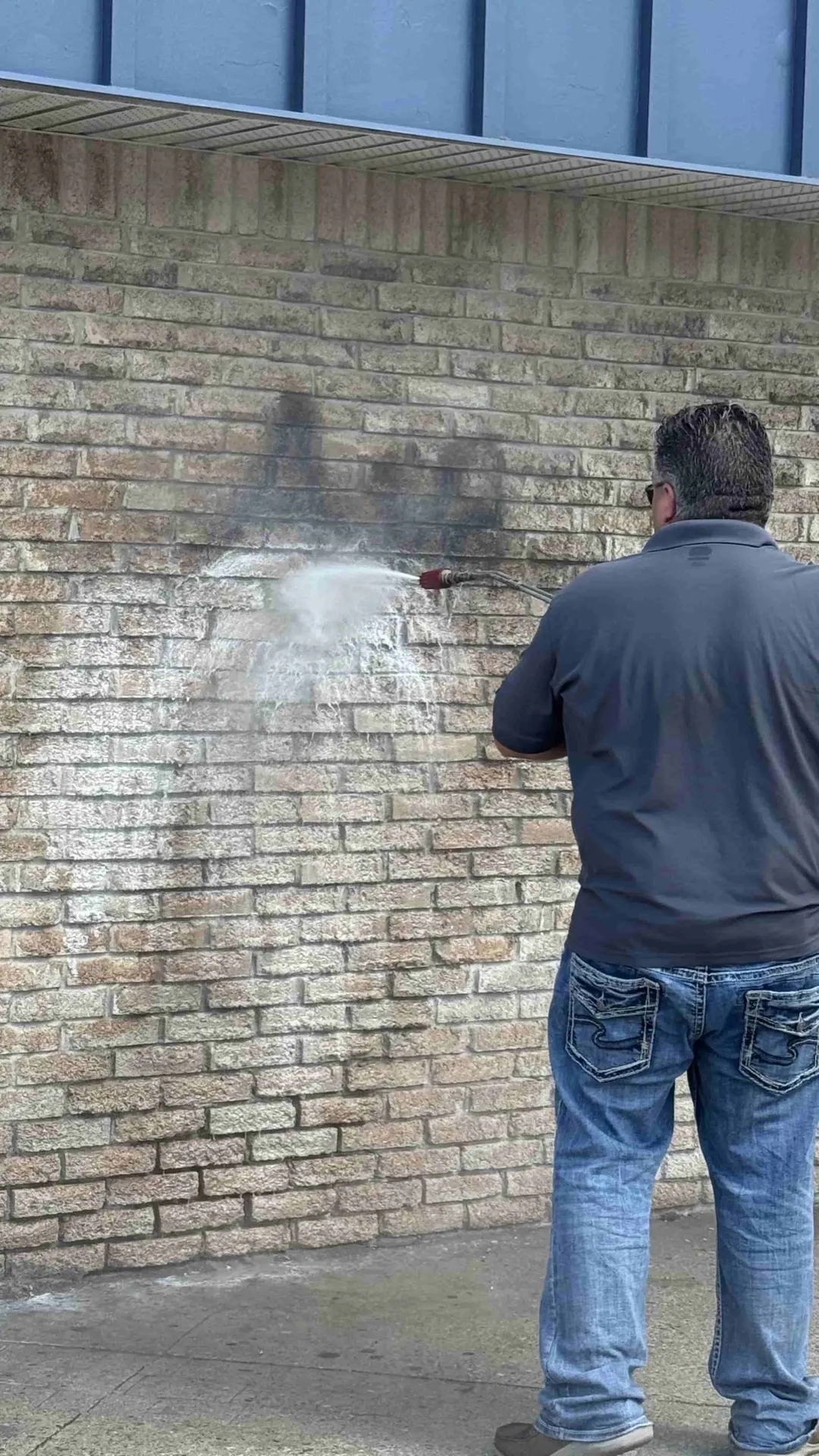
Concrete looks tough, and it is, but pressure washing it incorrectly can cause surface pitting, etching, and premature cracking. After years of Ontario winters filled with road salt, freeze-thaw cycles, and vehicle drips, your driveway or patio deserves a thorough clean. Here's exactly how to do it without making things worse.
In This Article
- Why Concrete Needs Special Care When Pressure Washing
- The Correct PSI for Pressure Washing Concrete
- Nozzle Selection: The Most Important Choice You'll Make
- Pre-Treating Stains: Do This Before You Touch the Pressure Washer
- Technique and Movement: How to Actually Run the Wand
- After Cleaning: Should You Seal Your Concrete?
- Common Mistakes That Damage Concrete
Why Concrete Needs Special Care When Pressure Washing
Concrete is porous. That's what makes it so vulnerable to staining, oil, rust, algae, and road salt all seep in and bond with the surface over time. But that same porosity means that an overly aggressive pressure washer can blast away the cement paste on the surface, exposing the aggregate underneath and permanently weakening the top layer.
In Kitchener-Waterloo, the problem is compounded by winter road salt. Salt accelerates concrete spalling, a process where the surface flakes and breaks apart. When you pressure wash already salt-stressed concrete with too much force, you're essentially blasting away what little structural integrity remains at the surface. The result: rough, pitted concrete that holds more dirt and stains even faster than before.
Newer concrete (less than one year old) is particularly vulnerable. The curing process isn't fully complete, and aggressive cleaning can disrupt the surface finish permanently. If your driveway was poured within the last 12 months, be extra conservative with your pressure settings.
Pro Tip: Before you start, wet a small inconspicuous section with your pressure washer at your intended settings. If you see surface material coming up or the texture changing, reduce pressure immediately.
The Correct PSI for Pressure Washing Concrete
The sweet spot for most residential concrete surfaces is 2,500 to 3,000 PSI. This is powerful enough to remove embedded dirt, oil residue, algae, and road salt staining without etching or damaging a sound concrete surface.
| Concrete Type | Recommended PSI | Notes |
|---|---|---|
| Standard driveway concrete | 2,500–3,000 PSI | Most residential driveways |
| Exposed aggregate | 2,000–2,500 PSI | Aggregate can dislodge at high PSI |
| Stamped/decorative concrete | 1,500–2,000 PSI | Patterns can be damaged by high pressure |
| New concrete (under 1 year) | 1,200–1,500 PSI | Curing still incomplete |
| Poured concrete patios | 2,000–2,500 PSI | Often smoother than driveways |
Most consumer-grade electric pressure washers top out at 1,500–2,000 PSI, which is generally adequate for light cleaning but may struggle with heavy oil stains or deeply embedded algae. Gas-powered pressure washers in the 2,500–3,500 PSI range give you more cleaning power and are what professional pressure washing services like ours use on driveways.
Driveway or patio seen better days?
We pressure wash driveways, patios, decks and walkways across Kitchener, Waterloo, Cambridge & Guelph. Free, no-obligation quotes, ready within 1 business day.
Nozzle Selection: The Most Important Choice You'll Make
PSI is only half the equation. The nozzle (tip) you choose determines how that pressure is concentrated. Using the wrong tip is one of the most common causes of concrete damage from pressure washing.
Nozzles are colour-coded by the angle of their spray fan:
- Red (0°): A pinpoint stream. Never use this on concrete, it will etch lines and cause permanent surface damage.
- Yellow (15°): Narrow, very aggressive. Use only for heavy stain pre-treatment, never for general cleaning sweeps.
- Green (25°): The ideal general cleaning nozzle for most concrete surfaces. Wide enough to clean efficiently without concentrating too much force.
- White (40°): A gentle, wide fan. Good for rinsing, lighter concrete cleaning, and older or more delicate surfaces.
- Black (65°): Low-pressure soap nozzle. For applying detergent, not for cleaning.
For the vast majority of concrete driveways in Kitchener-Waterloo, start with the 25° green tip. If you're dealing with particularly stubborn staining, a surface cleaner attachment (a spinning bar that creates a consistent cleaning pattern) eliminates streaking and applies even pressure.
Pro Tip: Surface cleaner attachments are worth renting for large driveways. They prevent the zebra-stripe pattern that happens when you clean with a single wand in overlapping passes at slightly different distances.
Pre-Treating Stains: Do This Before You Touch the Pressure Washer
Pressure washing alone won't remove set-in oil stains. Trying to blast them out with raw water pressure simply drives the oil deeper into the concrete pores or spreads it around. Pre-treatment is essential.
For fresh oil or grease spills (less than 48 hours old):
- Absorb excess oil with kitty litter, sawdust, or baking soda. Let sit 30 minutes, then sweep up.
- Apply a heavy-duty degreaser (Simple Green, Purple Power, or a commercial concrete degreaser).
- Scrub with a stiff-bristled brush and let dwell 10–15 minutes.
- Now pressure wash the area.
For old, dried oil stains:
- Apply a concrete degreaser and let it penetrate for 20–30 minutes.
- Scrub aggressively with a deck brush.
- Re-apply degreaser and let dwell another 15 minutes.
- Pressure wash at 2,500–3,000 PSI with a 15° or 25° tip aimed directly at the stain.
Be realistic: very old oil stains (months or years old) may lighten significantly but not disappear completely. The oil has polymerized inside the concrete's pores. Manage expectations before you start.
For rust stains (common from metal furniture, tools, or vehicles), use an oxalic acid-based rust remover. Apply, let dwell, scrub, then pressure wash. Do not use bleach on rust, it can set the stain permanently.
For green or black algae growth, apply a diluted sodium hypochlorite solution (bleach), about 1 cup of bleach per gallon of water, and let it dwell 10 minutes before pressure washing. The soft washing approach kills algae at the root rather than just blasting it away.
Technique and Movement: How to Actually Run the Wand
How you move the wand during cleaning makes a bigger difference than most people expect. Bad technique creates uneven cleaning, streaks, and surface damage. Here's the right approach:
Distance from surface: Hold the nozzle 6–12 inches from the concrete. Closer than 6 inches concentrates too much force on a small area. Farther than 12 inches loses cleaning power significantly.
Angle: Spray at a slight angle (about 45 degrees to the surface), not straight down. This allows dirty water to move away from the cleaned area rather than pooling and re-depositing grime.
Overlapping passes: Move in long, sweeping strokes. Overlap each pass by about 50% to ensure even cleaning. Work systematically from one end to the other.
Never stop moving. A stationary pressure washer nozzle will etch a visible mark into concrete within seconds. If you need to stop, to adjust your position, to scratch your nose, pull the trigger off first.
Work with gravity: On sloped driveways, work from the high end to the low end. Dirty water should flow away from where you've already cleaned.
Rinse thoroughly: After cleaning, do a thorough final rinse with a 40° tip to wash away all loosened dirt, cleaning chemicals, and debris. Pay attention to the edges and any low spots where dirty water can pool.
"The two things that cause the most concrete damage from pressure washing are using too narrow a tip and stopping the wand mid-pass. Keep it moving and keep the tip appropriate for the surface."
- Devon, D&D Home Services Founder
After Cleaning: Should You Seal Your Concrete?
Freshly cleaned concrete is the ideal time to apply a concrete sealer, and we strongly recommend it for Ontario driveways and patios. Here's why: sealing closes the pores that let oil, road salt, and water penetrate. This directly addresses the freeze-thaw damage that destroys so many Ontario driveways, water gets in, freezes, expands, and chips the surface from within.
Sealing should be done within 24–48 hours of pressure washing, once the surface is completely dry. Applying sealer to damp concrete traps moisture and causes the sealer to fail or bubble.
Types of concrete sealers:
- Penetrating sealers (silane/siloxane): Soak into the concrete and chemically bond with the pores. Invisible finish. Best protection against salt and water damage. Last 5–10 years. The best choice for Ontario driveways.
- Acrylic film-forming sealers: Create a surface coating. Can give a wet or glossy look. Last 2–5 years but need reapplication more often. Good for decorative concrete.
- Epoxy and polyurethane sealers: Industrial strength. Generally used in garage floors and commercial settings.
Apply sealer on a dry day when temperatures are between 10°C and 25°C. Ontario spring and fall offer ideal conditions. Avoid applying in direct hot sunlight, the sealer can dry too quickly and not penetrate properly.
Our concrete sealing service pairs well with pressure washing, so a clean concrete driveway stays protected through salt season.
Common Mistakes That Damage Concrete
We've seen the aftermath of DIY pressure washing gone wrong on many Kitchener-Waterloo properties. Here are the most common errors:
- Using a 0° or 15° tip for general cleaning: Causes permanent etching lines in the surface. These cannot be repaired without resurfacing.
- Getting too close to the surface: Under 4 inches of nozzle distance at high PSI will etch, pit, and scar concrete, especially decorative or exposed aggregate surfaces.
- Moving too slowly: Dwelling too long in one spot concentrates pressure and etches the surface.
- Skipping pre-treatment: Trying to blast out oil stains without degreaser spreads them and grinds them deeper into the pores.
- Using bleach on rust stains: Sets the stain. Use oxalic acid instead.
- Pressure washing in freezing temperatures: Water in the pores can freeze immediately and cause cracking. Wait for consistent above-zero temperatures, typically May through October in Ontario.
- Not sealing afterwards: Clean, open pores are highly susceptible to immediate re-contamination.
- Ignoring the salt damage context: Ontario road crews apply heavy calcium and magnesium chloride all winter. This salt is tracked onto your driveway by tires and boots, and it breaks down concrete aggressively. Pressure washing in spring removes this salt buildup and is one of the most important things you can do to extend your driveway's life.
Key Takeaways
- ✓ Use 2,500–3,000 PSI for standard concrete driveways; lower for decorative or new surfaces
- ✓ Choose the 25° (green) tip for general cleaning, never use the 0° red tip on concrete
- ✓ Pre-treat oil stains with degreaser before pressure washing, water alone won't remove them
- ✓ Keep the wand moving at all times, stopping even briefly can etch the surface
- ✓ Seal within 24–48 hours of cleaning while pores are open and clean
- ✓ Spring cleaning removes Ontario road salt - one of the best things you can do for driveway longevity

Request a home-service quote
Select the service you need and describe the work area and access.