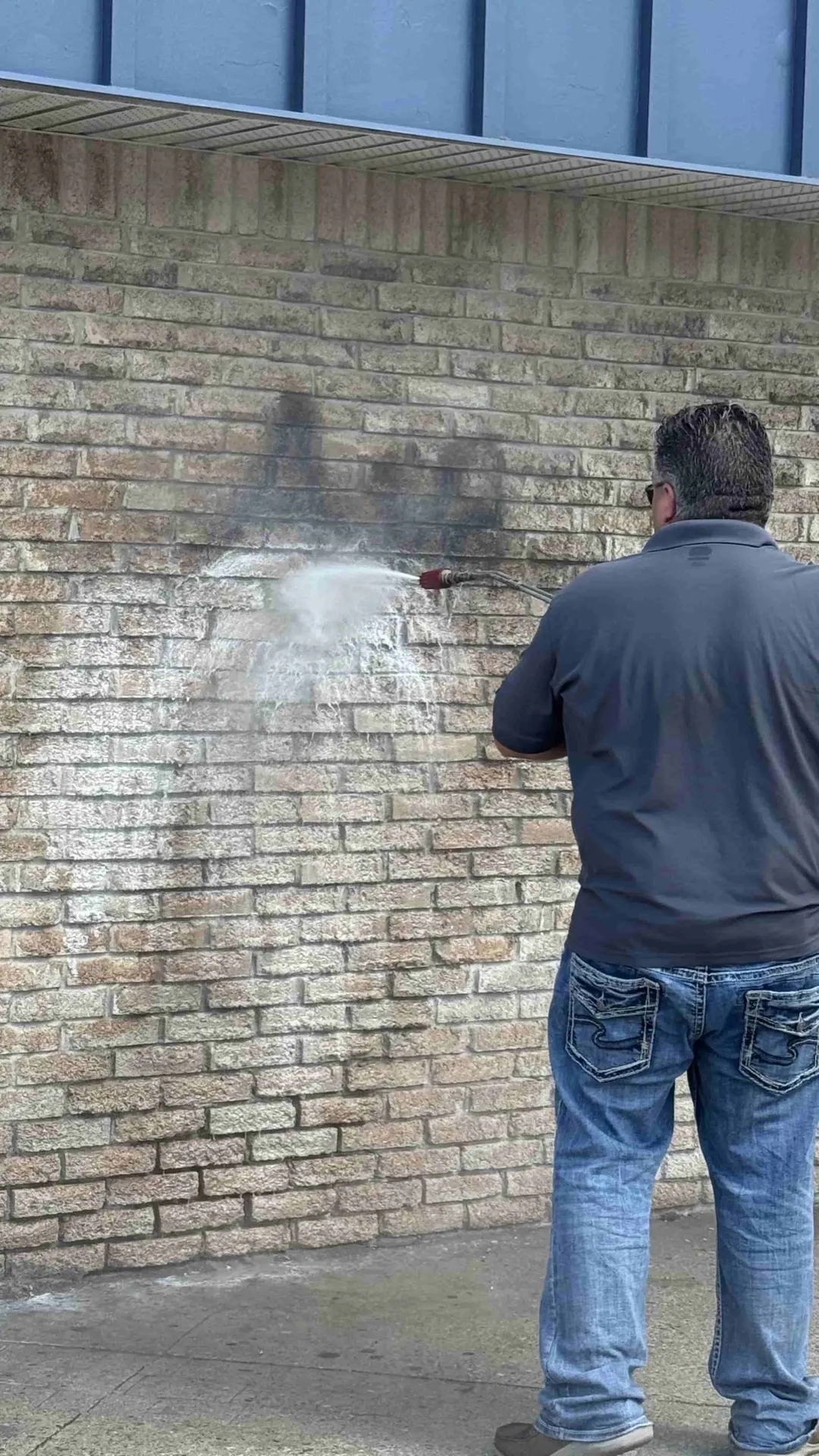
The terms "power washing" and "pressure washing" are used interchangeably in everyday conversation, and by many cleaning companies who should know better. They're not the same thing, and the difference has practical implications for what gets clean, how effectively, and at what cost. Here's the clear breakdown.
In This Article
The Key Difference: It's All About Temperature
The single defining difference between power washing and pressure washing is water temperature:
- Pressure washing uses cold or ambient-temperature water at high pressure. The cleaning is done purely by mechanical force, the pressurized water physically blasting surface contaminants away.
- Power washing uses heated water at high pressure. The water is heated to temperatures between 60°C and 95°C (140°F–200°F) before it reaches the nozzle. Both heat and pressure work together to clean the surface.
Everything else, the PSI, the nozzle types, the flow rate (GPM), the application technique, can be identical between the two methods. The water heater (or lack of one) is the only technical distinction.
In terms of equipment: both methods use high-pressure pumps driven by electric or gas motors. Power washers have an additional heating element, typically a diesel- or propane-fired coil heater that the water passes through before reaching the spray gun. This adds significant size, weight, and cost to the equipment. A commercial power washer might weigh 200+ kilograms and require a truck or trailer for transport.
Pro Tip: If someone quotes you a "power washing" service at the same price as a basic "pressure washing" job, ask about the equipment. True hot-water power washing requires significantly more expensive equipment and costs more to operate, dramatically lower quotes likely mean cold-water pressure washing is being done.
When Hot Water Makes a Meaningful Difference
Hot water's advantage is specifically related to the chemistry of cleaning:
Grease and oil: Heat is the most important factor in oil removal. Hot water dissolves grease and oil at a molecular level, separating the hydrophobic molecules so they can be carried away by the water stream. Cold water simply pushes grease around, it doesn't dissolve it. For commercial kitchen exteriors, restaurant dumpster areas, automotive shop floors, and gas station forecourts, hot water power washing is dramatically more effective than cold water pressure washing at the same PSI.
Bacteria and pathogens: Hot water at sufficient temperature kills bacteria. This is particularly relevant for food service settings (restaurant equipment, commercial kitchen hoods, food processing areas) and medical facilities. Cold water doesn't kill bacteria, it just removes it from one surface to another.
Gum removal: Chewing gum on sidewalks, parking lots, and public spaces bonds strongly to concrete. Hot water (at 95°C+) softens and melts gum so it can be blasted off. Cold pressure washing just rolls gum around without removing it. Power washing is the standard method used for commercial sidewalk and plaza gum removal.
Mould and mildew killing: Hot water at sufficient temperature kills mould on contact. Cold water displaces it, but living spores can re-colonize cleaned surfaces. For heavily mould-contaminated commercial surfaces, hot water washing provides superior kill rates compared to cold water. (Note: for residential soft washing, the sodium hypochlorite chemical approach achieves the mould kill that hot water provides commercially.)
Wax and grease deposits in cold weather: Ontario winters present a specific challenge, cold temperatures cause grease and wax-based contaminants to harden. In February, cleaning commercial grease deposits from restaurant exhaust fans or removing vehicle wax buildup from parking structures requires hot water to soften and remove these materials. Cold water pressure washing at the same PSI simply can't accomplish the same result in sub-zero conditions.
Driveway or patio seen better days?
We pressure wash driveways, patios, decks and walkways across Kitchener, Waterloo, Cambridge & Guelph. Free, no-obligation quotes, ready within 1 business day.
PSI Comparison: Same Numbers, Different Results
Here's something that surprises many people: a power washer and a pressure washer at the same PSI will both produce the same mechanical cleaning force. A 3,000 PSI power washer and a 3,000 PSI pressure washer deliver the same water pressure to the surface.
But the effective cleaning power of the power washer is significantly higher, because the hot water does additional chemical work that the cold water can't match. This means:
- Power washing achieves the same cleaning result as cold pressure washing at lower PSI for many applications
- Power washing removes contaminants that cold pressure washing can't remove at any PSI
- Power washing requires fewer passes to achieve a clean surface, meaning less total water usage and faster job completion
For surfaces where PSI itself is the concern (like soft wood, stucco, or interlock), power washing at reduced PSI combined with hot water can clean more effectively than pressure washing at higher PSI, protecting the surface while achieving better results.
| Application | Cold Pressure Washing | Hot Power Washing |
|---|---|---|
| Residential concrete driveway | Excellent | Excellent |
| Deck cleaning | Excellent | Good (care with temp) |
| Vinyl siding | Excellent | Good |
| Commercial grease removal | Poor | Excellent |
| Gum removal from concrete | Poor | Excellent |
| Oil stain from driveway | Good (with degreaser) | Very Good |
| Mould on siding | Good (with bleach) | Very Good |
| Winter cleaning (below zero) | Poor | Excellent |
| Restaurant equipment exterior | Poor | Excellent |
Residential vs. Commercial: Where the Distinction Matters
For most residential cleaning applications in Kitchener-Waterloo, cold water pressure washing is entirely adequate. Driveways, decks, patios, siding, fences, and walkways all clean thoroughly with cold water at appropriate pressure, particularly when combined with cleaning solutions (degreasers, soft washing chemicals) that do the chemical work that hot water would otherwise provide.
The cases where residential homeowners genuinely benefit from hot water power washing are limited:
- Significant engine oil or transmission fluid spills on concrete (from vehicle repairs)
- Cleaning in near-freezing spring conditions (below 5°C) when cold water effectiveness is limited
- Commercial-scale grease deposits (if you run a home-based food business with exterior cooking equipment)
For commercial clients, hot water power washing is often the right choice for:
- Restaurant exteriors, loading docks, and dumpster areas
- Service station forecourts and fuel islands
- Industrial facility exteriors and equipment cleaning
- Commercial parking lot sidewalks (gum removal)
- Food processing facility washdowns
"Most homeowners don't need hot water power washing for their driveways and siding, cold pressure washing with the right technique and chemistry achieves excellent results. Where hot water genuinely earns its cost is commercial grease removal and cleaning in cold weather."
- Devon, D&D Home Services Founder
What D&D Home Services Uses
We operate commercial-grade cold water pressure washing equipment for residential and commercial cleaning throughout Kitchener-Waterloo. Our setup delivers consistent PSI across all nozzle types, proper flow rates for efficient cleaning, and the ability to inject cleaning chemicals (degreasers, soft washing solutions) into the water stream.
For the vast majority of residential cleaning, driveways, patios, decks, walkways, siding, fences, this equipment combined with appropriate cleaning chemistry delivers results that equal or exceed what a hot water power washer achieves, at appropriate pressure settings for each surface type.
For commercial contracts and specific residential situations where hot water is genuinely advantageous (significant oil spills, very heavy commercial grease), we have access to hot water equipment and will deploy it where the job calls for it.
When you request a quote from us, we'll assess your specific situation and recommend the right approach, not the most expensive approach. Our pressure washing service page has more detail on what we clean and how.
Choosing the Right Service for Your Needs
When selecting an exterior cleaning service, the power washing vs. pressure washing distinction is less important than these questions:
- Does the company understand surface-appropriate pressure settings? More important than hot vs. cold is whether the cleaner knows not to use 3,000 PSI on wood siding or interlock paving.
- Do they use appropriate cleaning chemistry? Chemical pre-treatment (degreasers for oil, soft washing solutions for biological growth) often does more cleaning work than equipment differences.
- Are they insured and experienced with your surface type? Damaged surfaces cost significantly more to repair than the original cleaning job costs.
- Do they work in the right weather window? For Ontario, consistent above-zero temperatures and dry forecasts are critical for effective cleaning and safe operation.
The marketing term "power washing" is often used simply to sound more impressive than "pressure washing." Ask about specifics when comparing quotes, equipment specs, PSI ranges, and whether hot water is actually being used.
Key Takeaways
- ✓ The only difference is water temperature - power washing heats the water, pressure washing uses cold water
- ✓ Hot water excels at grease, gum, and bacteria removal - cold water handles most residential surfaces equally well with chemistry
- ✓ Same PSI = same mechanical force regardless of water temperature; hot water adds chemical cleaning power
- ✓ Most residential Ontario homeowners don't need hot water for driveways, siding, and decks
- ✓ Commercial applications benefit most from hot water: restaurants, gas stations, industrial settings
- ✓ Surface-appropriate technique and chemistry matter more than hot vs. cold for residential results

Request a home-service quote
Select the service you need and describe the work area and access.