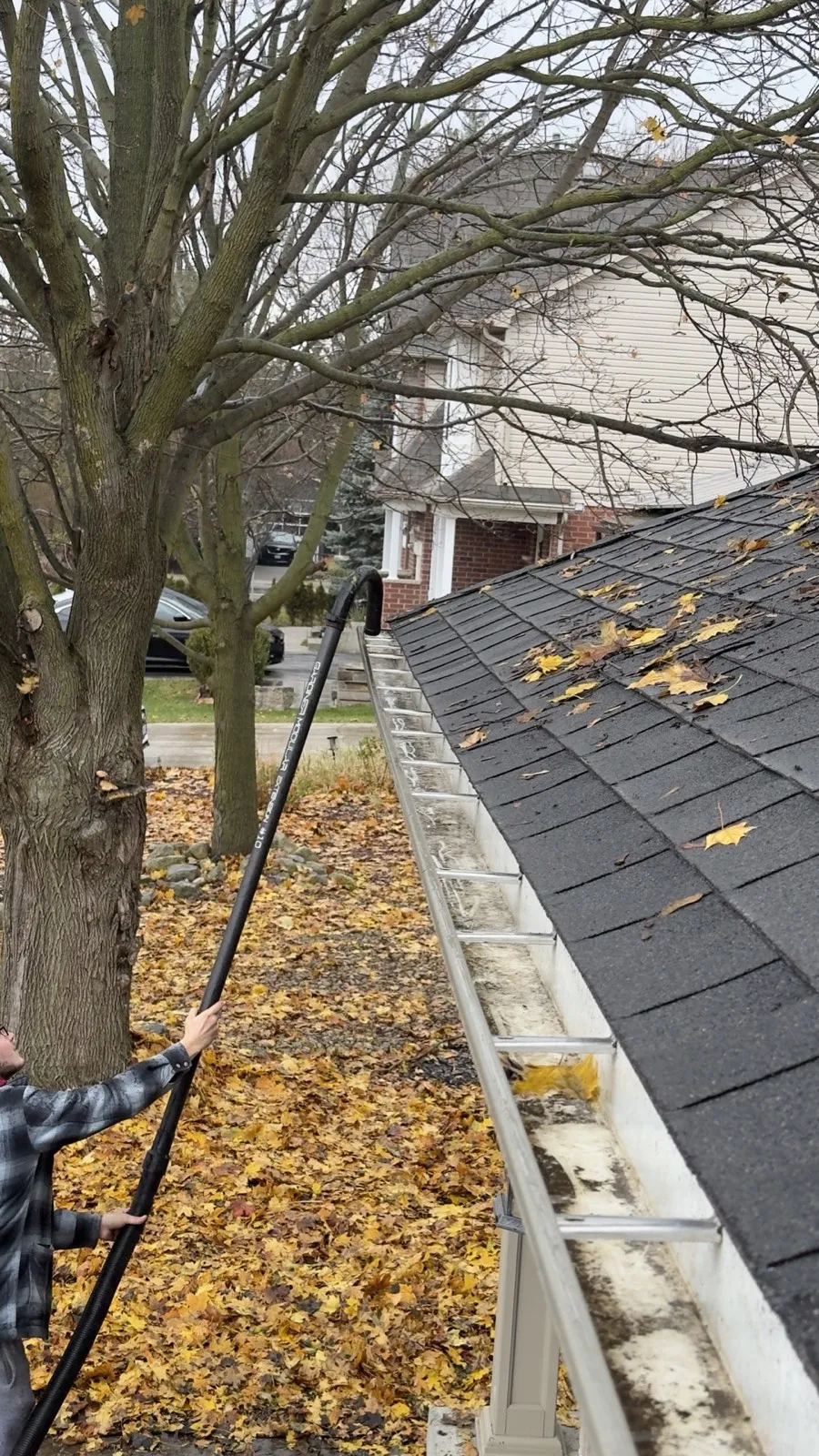
A thorough spring gutter inspection takes 30–45 minutes and can identify problems early enough to address them before they cause serious damage. Here is the complete checklist used by professional gutter technicians, adapted for homeowners doing a ground-level and accessible-ladder assessment.
In This Article
Ground-Level Inspection
Start by walking your entire home perimeter and looking at your gutters from below. Check for: any sections that are visibly sagging or appearing to pull away from the fascia; visible debris overflowing the top of gutters; any sections where paint on the fascia is bubbling, peeling, or dark with moisture staining; downspout connections that appear disconnected or damaged; and any vegetation growing from gutters (a clear sign of soil and moisture buildup).
Also check your foundation perimeter carefully. Soil erosion channels, discolouration of foundation concrete, and pooling in low spots near the foundation are signs that water is not being directed away effectively, often due to gutter overflow or downspout discharge problems.
Ladder Inspection Points
For accessible sections (single-storey, or safely reachable two-storey sections): check gutter profile for any deformation, denting, or crushed sections from ice loading; check gutter hangers and brackets for rust, bending, or pulling away from the fascia; look inside the gutter for accumulated debris, standing water (indicating incorrect pitch), or evidence of rust pitting; check all seam joints for separation or sealant failure; inspect the back edge of the gutter where it meets the fascia for moisture damage or gap formation.
Pro Tip: After any rain event of 10mm or more, check that all your downspouts are actively discharging water. If any downspout is dry while others are flowing, there's a blockage somewhere in that run that needs professional clearing.
Gutters overflowing, or overdue for a clean?
We clean and flush gutters across Kitchener, Waterloo, Cambridge & Guelph, and catch small problems before they reach your foundation. Free, no-obligation quotes, ready within 1 business day.
Downspout Checks
Downspout inspection: check that all downspout sections are securely connected (top connection to gutter outlet, all mid-sections, bottom elbow); look for rust, cracking, or crushing on aluminum downspouts; check the discharge point, is water being directed away from the foundation? Is the splash pad or underground connection intact? For underground-connected downspouts, verify there's no evidence of connection failure (soggy soil, erosion around the connection point).
Interior Warning Signs
From inside the home: check basement walls for any new moisture staining, efflorescence (white salt deposits), or water marks at the spring thaw period; inspect attic eaves for staining or moisture that could indicate ice dam backup or gutter overflow infiltration; check window wells for signs of overflow or ponding.
What to Do With Your Results
No issues found: schedule your spring professional cleaning and you're in good shape. Minor issues (debris, small joint separation): book cleaning and ask for a repair quote. Significant issues (fascia damage, major pitch problems, structural damage): get a professional assessment before the next rainfall. D&D Home Services provides comprehensive gutter cleaning and inspection throughout KW. Book today.
Key Takeaways
- ✓ Professional service saves time and delivers better results than DIY
- ✓ Regular maintenance protects your home's value and curb appeal
- ✓ D&D Home Services proudly serves Kitchener-Waterloo and surrounding areas
- ✓ Get a free no-obligation quote, call or book online anytime

Request a home-service quote
Select the service you need and describe the work area and access.