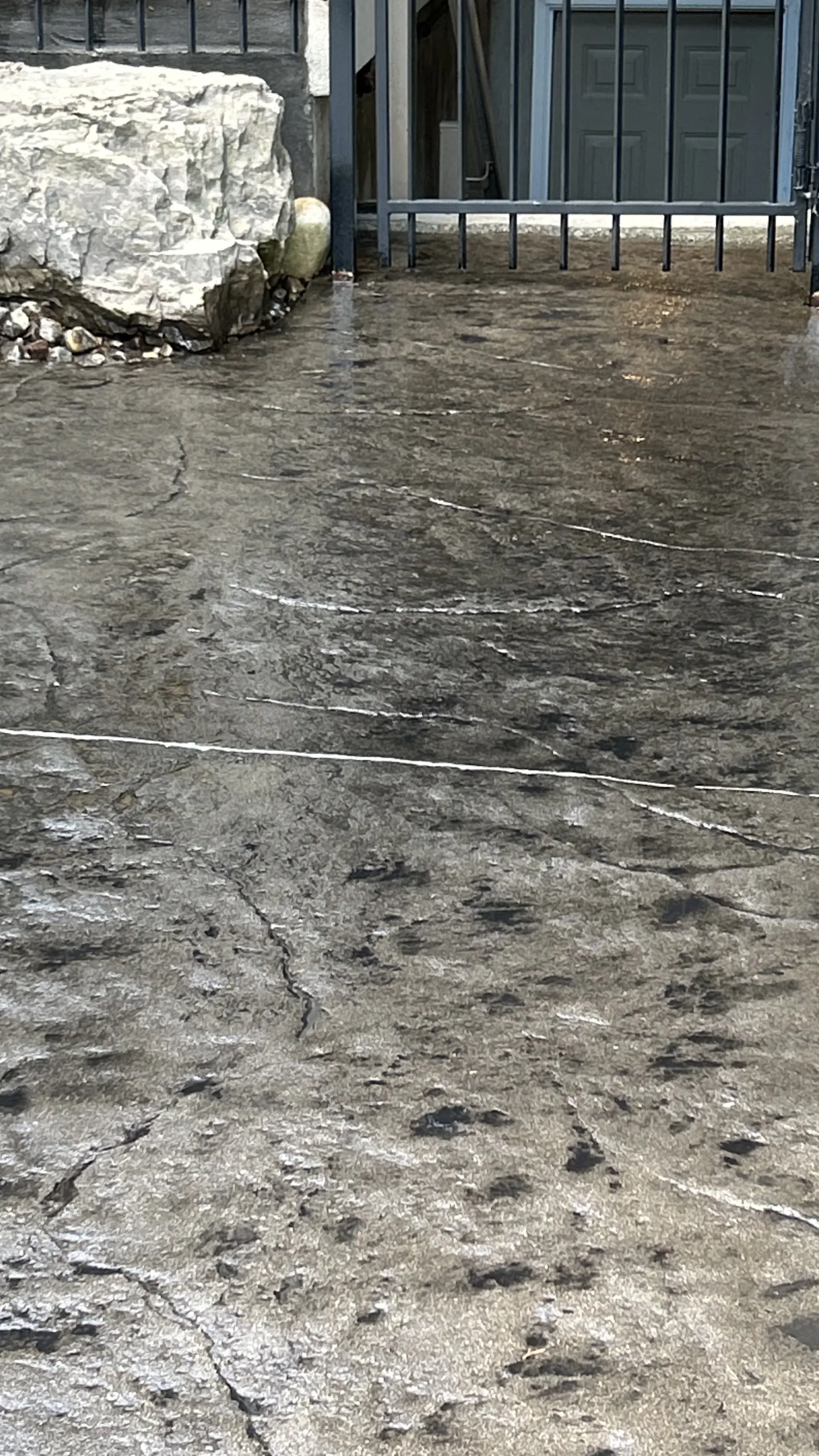
Soft washing a driveway is effective, but it's not always the right choice. For biological growth like green algae, black mould, lichen, and moss on concrete, soft washing kills the organisms at the root and produces results that last years, not months. For oil stains, tire marks, rust, or surface grime with no biological component, soft washing does very little. Choosing the right method for what's actually on your driveway is the key to getting the result you want.
In This Article
When Soft Washing Works on Driveways
Soft washing is the best approach when your driveway has visible biological growth: green algae tinting (especially common on shaded sections), black or dark spots that aren't oil (often Gloeocapsa magma algae), crusty lichen growth in cracks or on the surface, or a general greenish tint that comes back quickly after pressure washing. These organisms have root structures that penetrate into the concrete pores. Pressure washing removes the visible growth but leaves the roots behind, soft washing kills the organism entirely, producing results that last 2–4 years.
When Pressure Washing Is the Better Choice
For oil stains, grease, paint, tire scuff marks, or heavy mud without biological growth, pressure washing (often combined with a degreaser) is more effective than soft washing. Soft washing solutions are designed to kill biology, they're not surfactant-heavy enough to lift petroleum-based stains or mechanical soiling. Many driveways benefit from a combination approach: soft washing for biological treatment, followed by spot pressure washing for stains.
| Driveway Issue | Best Method |
|---|---|
| Green algae tinting | Soft washing |
| Black streaks / mould | Soft washing |
| Lichen or moss growth | Soft washing |
| Oil or grease stains | Pressure washing + degreaser |
| Rust stains | Oxalic acid treatment |
| General dirt and grime | Pressure washing |
| Mixed growth + stains | Combination approach |
Black streaks creeping across your siding?
Our low-pressure soft wash removes algae, mould and black streaks without damaging your siding. Free, no-obligation quotes across Kitchener, Waterloo, Cambridge & Guelph, ready within 1 business day.
Concrete vs. Asphalt: Does It Matter?
For concrete driveways, soft washing is straightforward. Standard SH-based solutions work effectively on concrete without damaging the surface, and the results are excellent for biological growth. For asphalt, the chemistry is similar but concentration should be kept lower, SH at high concentration can affect asphalt sealers and the petroleum binders in unsealed asphalt. If your asphalt driveway has a fresh seal coat, soft washing is not recommended within the first season; use a low-pressure rinse and mild detergent instead.
Soft Washing Before Driveway Sealing
One of the best applications of soft washing for driveways is pre-sealing preparation. Applying driveway sealer over biologically contaminated concrete or asphalt traps the organisms under the sealer, leading to premature peeling and blotchy colour. A soft wash treatment before sealing kills any surface biology, producing better sealer adhesion and a more even, longer-lasting result.
Timing: Allow the driveway to dry for 48–72 hours after soft washing before applying sealer. The surface needs to be fully dry for proper sealer adhesion.
Professional Driveway Soft Washing
D&D Home Services provides professional soft washing for driveways, walkways, patios, and house exteriors across Kitchener-Waterloo, Cambridge, and Guelph. We assess the type of staining present and recommend the right cleaning method, not a one-size-fits-all approach. Contact us for a free estimate.
Key Takeaways
- ✓ Professional service saves time and delivers better results than DIY
- ✓ Regular maintenance protects your home's value and curb appeal
- ✓ D&D Home Services proudly serves Kitchener-Waterloo and surrounding areas
- ✓ Get a free no-obligation quote, call or book online anytime

Request a home-service quote
Select the service you need and describe the work area and access.