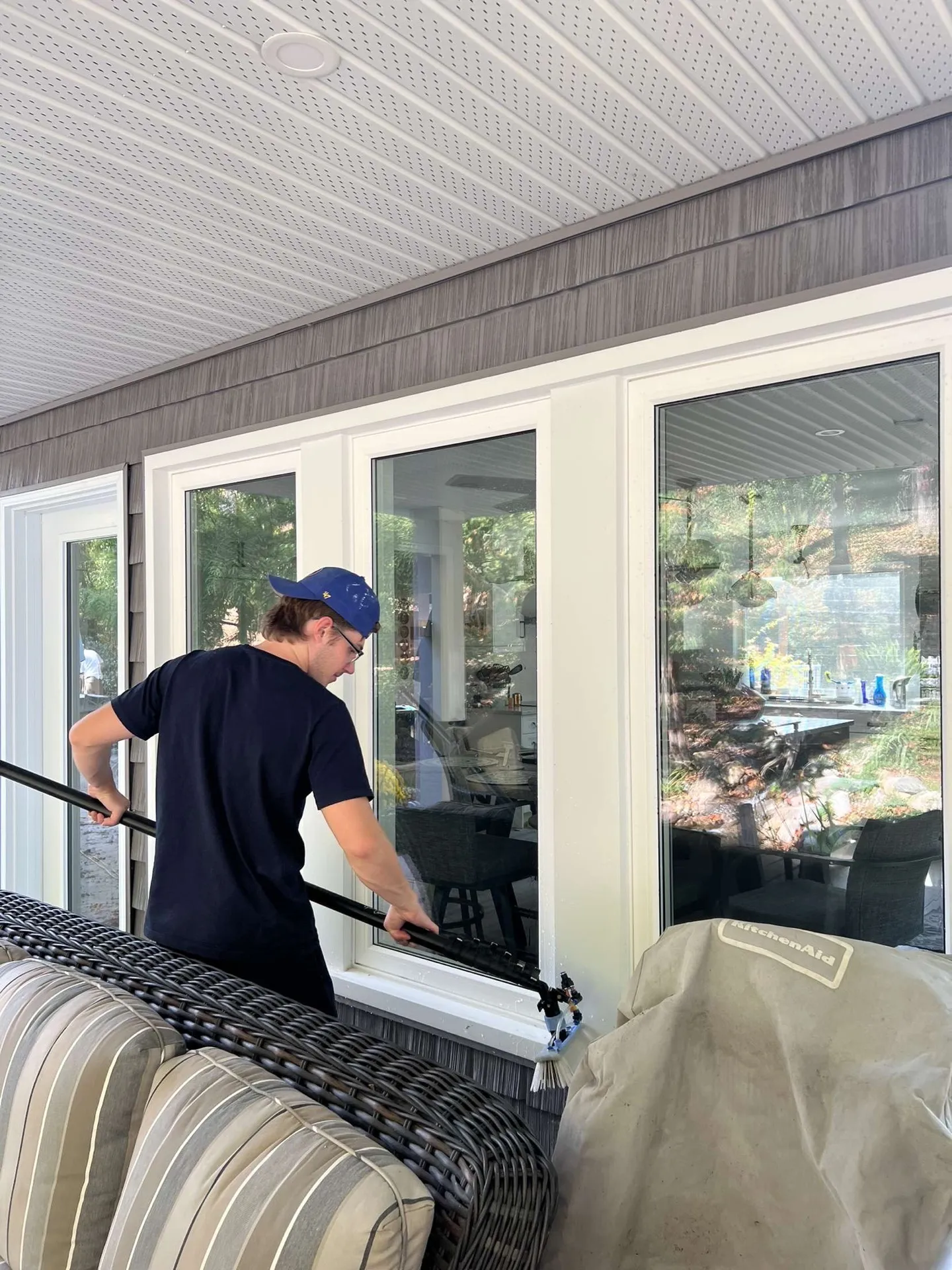
You've seen it on sunny days: a professional window cleaner finishes a panel with a few quick squeegee strokes and moves on, leaving perfectly streak-free glass behind. Then you try it at home with Windex and paper towels and end up with smeared glass. What's the difference? Quite a lot, actually.
In This Article
Professional Window Cleaning Tools
The right tools make all the difference. Here's what professionals actually use:
- Squeegee: A quality Ettore or Unger squeegee with a fresh rubber blade, the blade is the critical component. A nicked or worn rubber leaves lines. Professionals replace blades frequently.
- T-bar applicator: A T-shaped applicator with a microfiber sleeve for applying solution uniformly before squeegeeing. The sleeve must be kept clean, a contaminated applicator transfers grit that scratches glass.
- Pure water system (for exterior): A filtration system that removes all dissolved minerals from tap water. Pure water leaves no deposits when it dries, enabling the water-fed pole technique.
- Microfiber cloths: For detailing corners, frames, and sills, and for catching any drips at the squeegee end.
- Extension poles: Carbon fibre or aluminium poles enabling ground-level cleaning of upper-story windows.

The Right Cleaning Solution
Professional window cleaners use a simple solution: water with a small amount of dish soap (typically 1–2 drops per litre) or a professional window cleaning concentrate like Dawn Professional. The soap lubricates the squeegee rubber, helps lift dirt, and reduces surface tension.
What professionals don't use:
- Ammonia-based products (like Windex): Leaves a film in cold temperatures; harmful to tinted windows
- Too much soap: Creates excessive suds that are difficult to squeegee off cleanly
- Vinegar in cold weather: Can leave residue in low temperatures
- Paper towels: Scratch glass subtly over time and leave lint
Need a hand with your home's exterior?
From gutters and windows to full exterior washes, we help homeowners across Kitchener, Waterloo, Cambridge & Guelph. Free, no-obligation quotes, ready within 1 business day.
The Squeegee Technique
The mechanics of a streak-free squeegee pass:
- Apply solution with the T-bar applicator, working from top to bottom
- Start the squeegee at the top corner, pressing firmly with consistent pressure
- Pull in a horizontal arc, keeping the rubber at a 30-degree angle to the glass
- Wipe the rubber dry with a clean cloth after each pass
- Fan the bottom in the opposite direction or use a single vertical pass for the bottom third
- Detail corners and edges with a clean microfiber cloth
- Clean the frame and sill
"A professional can clean a standard residential window in under 90 seconds. The speed comes from the technique, not rushing. Correct mechanics are simply efficient."
- D&D Home Services Window Team
Pure Water Pole Systems
The modern standard for exterior window cleaning is the water-fed pole system. This approach:
- Filters tap water through a series of membranes (de-ionization or reverse osmosis) to remove all dissolved minerals, achieving zero TDS (total dissolved solids)
- Delivers this pure water through a brush head on an extendable carbon fibre pole
- The technician brushes the glass with pure water and rinses, the glass is then left to dry naturally
- Since the water contains no minerals, no deposits form as it dries, perfectly spot-free glass
The pure water system enables safe cleaning of second and third-story windows from ground level, eliminating ladder risk while often achieving better results than traditional squeegee methods on exterior glass.
Common DIY Window Cleaning Mistakes
- Cleaning in direct sunlight, solution dries too fast, leaving streaks before you can squeegee
- Using too much soap, creates suds that are impossible to fully remove
- Dirty squeegee rubber, a single piece of grit leaves a consistent streak across the glass
- Using newspaper, actually works well historically, but modern newspaper ink is now water-based and can smear
- Forgetting the frames, clean glass in dirty frames looks worse than dirty glass overall
- Skipping the screen cleaning, dirty screens transfer grime back to clean glass immediately
Best DIY Tip: If you're cleaning windows yourself, work on overcast days and use a clean squeegee with fresh rubber. The most important variable is the squeegee rubber condition, a worn blade is impossible to work with regardless of technique.
When to Call a Professional
When Professional Cleaning Is Worth It
- Any window above comfortable single-ladder reach, ladder falls are serious injuries
- Hard water mineral deposits or calcium buildup (requires specialized acid treatment)
- Post-construction cleaning (concrete, silicone, paint overspray)
- Before listing your home for sale, first impressions require professional quality
- Commercial properties where image is critical
- Simply when you want perfect results without the effort

Request a home-service quote
Select the service you need and describe the work area and access.