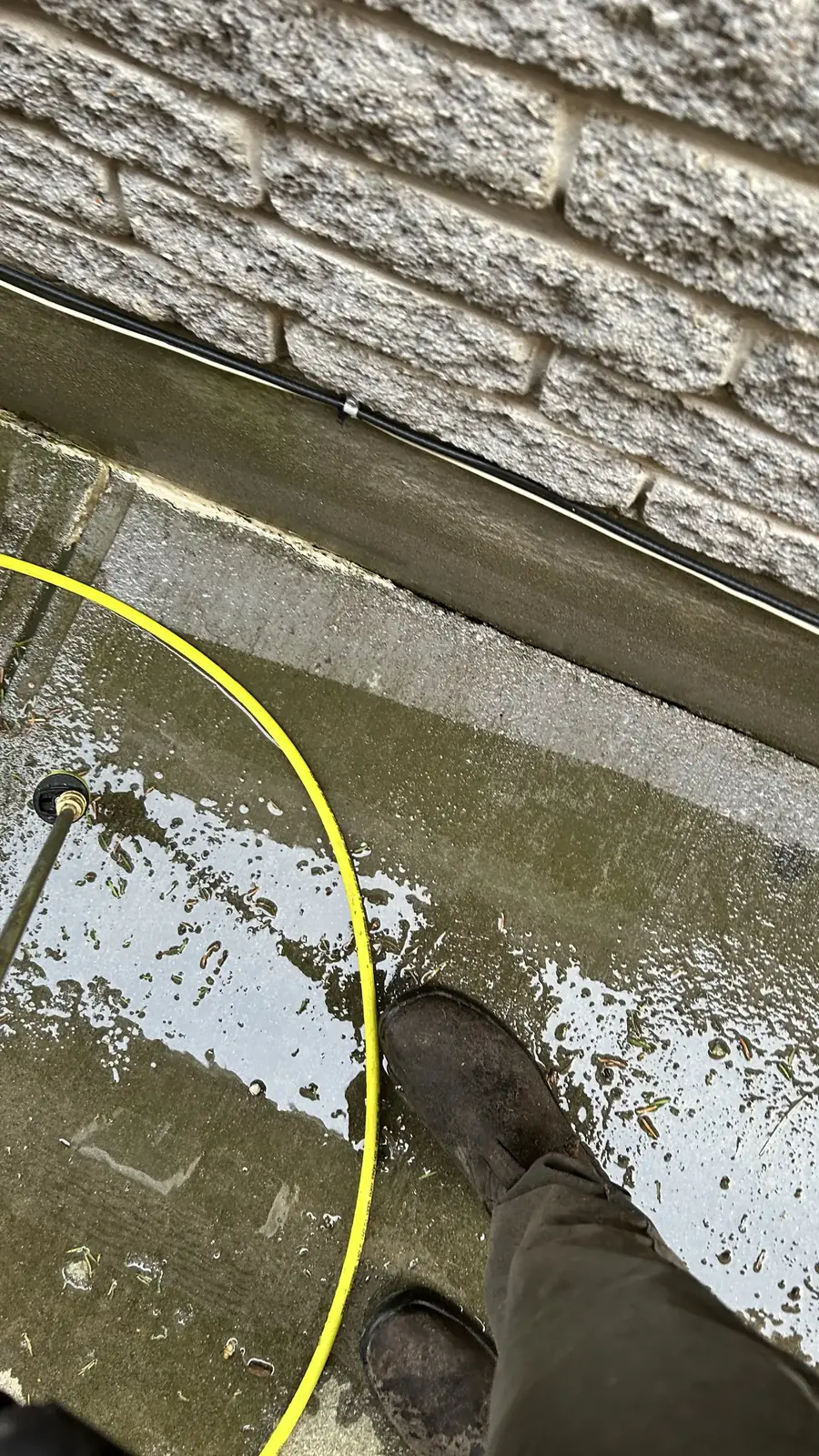
Pressure washing a house exterior can transform the appearance of a home, removing years of dirt, algae, oxidation, and staining in a single day. But it's also one of the easier ways to damage siding, blast water into wall cavities, or strip paint if done incorrectly. This guide covers what to know before you start, how to do it right, and which surfaces should never see a pressure washer.
In This Article
When to Pressure Wash Your House
Most Ontario homes benefit from a full exterior wash every 1–3 years depending on tree coverage, proximity to roads, and siding type. Signs it's time: visible algae or mildew staining (green or black patches on siding), general grime and darkening of lighter-coloured materials, cobwebs and wasp nest residue, or preparation before painting or staining.
Spring is the ideal timing in Ontario, after road salt season and before summer biological growth establishes. A spring wash removes winter grime, road salt spray, and pollen before they cause surface degradation.
Surfaces You Can Pressure Wash
The following exterior surfaces handle pressure washing well when proper technique is used: vinyl siding (moderate pressure, correct angle), brick and mortar (moderate pressure, avoid concentrated spray on damaged mortar joints), painted wood siding (low pressure, wide fan nozzle), concrete driveways and walkways (high pressure acceptable), composite and fibreglass decking (moderate pressure), and aluminum siding (moderate pressure, avoid denting).
Driveway or patio seen better days?
We pressure wash driveways, patios, decks and walkways across Kitchener, Waterloo, Cambridge & Guelph. Free, no-obligation quotes, ready within 1 business day.
Surfaces to Never Pressure Wash
Some surfaces are routinely damaged by homeowners using pressure washers incorrectly:
Stucco: Pressure washing erodes the surface layer and drives water into the substrate, causing delamination and moisture damage. Use soft washing instead.
Cedar shingles or siding: High pressure strips the protective outer wood fibres, reducing natural weather resistance and accelerating checking and splitting. Cedar requires soft washing or very low-pressure rinsing only.
Roof shingles: Pressure washing removes protective granules and significantly shortens shingle life. Roofs should be soft washed exclusively.
Window screens and frames: Screens tear easily and frames can bend or be damaged by direct pressure at close range.
The Angle Rule: Never aim a pressure washer upward at siding or trim. Water forced upward under laps and behind trim bypasses all the weatherproofing designed to keep water out. Always spray downward, following the natural direction water would run off the surface.
Equipment: What You Need
For house washing, a pressure washer in the 1,500–2,500 PSI range with variable nozzles is appropriate. A 25-degree (green) or 40-degree (white) nozzle provides a wide enough fan to clean effectively without concentrated damage risk. The red 0-degree nozzle should never be used on siding, it's for concrete only.
A downstream injector allows you to apply cleaning solution through the washer at low pressure, important for algae and mildew removal, which requires chemical action, not just water force. Apply solution at low pressure from bottom to top, let it dwell 5–10 minutes, then rinse from top to bottom with clean water.
Extension wands let you reach second-storey siding from the ground, safer than ladder work and provides better technique control.
Preparation Steps
Close all windows and exterior vents. Cover electrical outlets, light fixtures, and air conditioning units with plastic. Wet down nearby plants before applying cleaning solutions and rinse them again after. Move vehicles and patio furniture out of the work area. Wet the ground around foundation plantings to dilute any runoff from cleaning agents.
Washing Technique
Apply cleaning solution with the downstream injector from bottom to top (prevents streaking from runoff). Allow 5–10 minute dwell time. Rinse from top to bottom with clean water at appropriate pressure. Work in sections, don't let solution dry on the surface before rinsing. Keep the nozzle 30–60 cm from the surface and move continuously, stationary spraying concentrates pressure and risks damage.
When to Hire a Professional
Consider professional house washing when: your home is two storeys or higher and requires height work; you have mixed siding materials requiring different techniques; you're dealing with heavy mold, algae, or oxidation that needs proper chemical treatment; or you're preparing for painting and need consistently clean surfaces for adhesion. Get My Free Quote from D&D Home Services for exterior house washing across Kitchener, Waterloo, Cambridge, and Guelph.
Key Takeaways
- ✓ Professional service saves time and delivers better results than DIY
- ✓ Regular maintenance protects your home's value and curb appeal
- ✓ D&D Home Services proudly serves Kitchener-Waterloo and surrounding areas
- ✓ Get a free no-obligation quote, call or book online anytime

Request a home-service quote
Select the service you need and describe the work area and access.