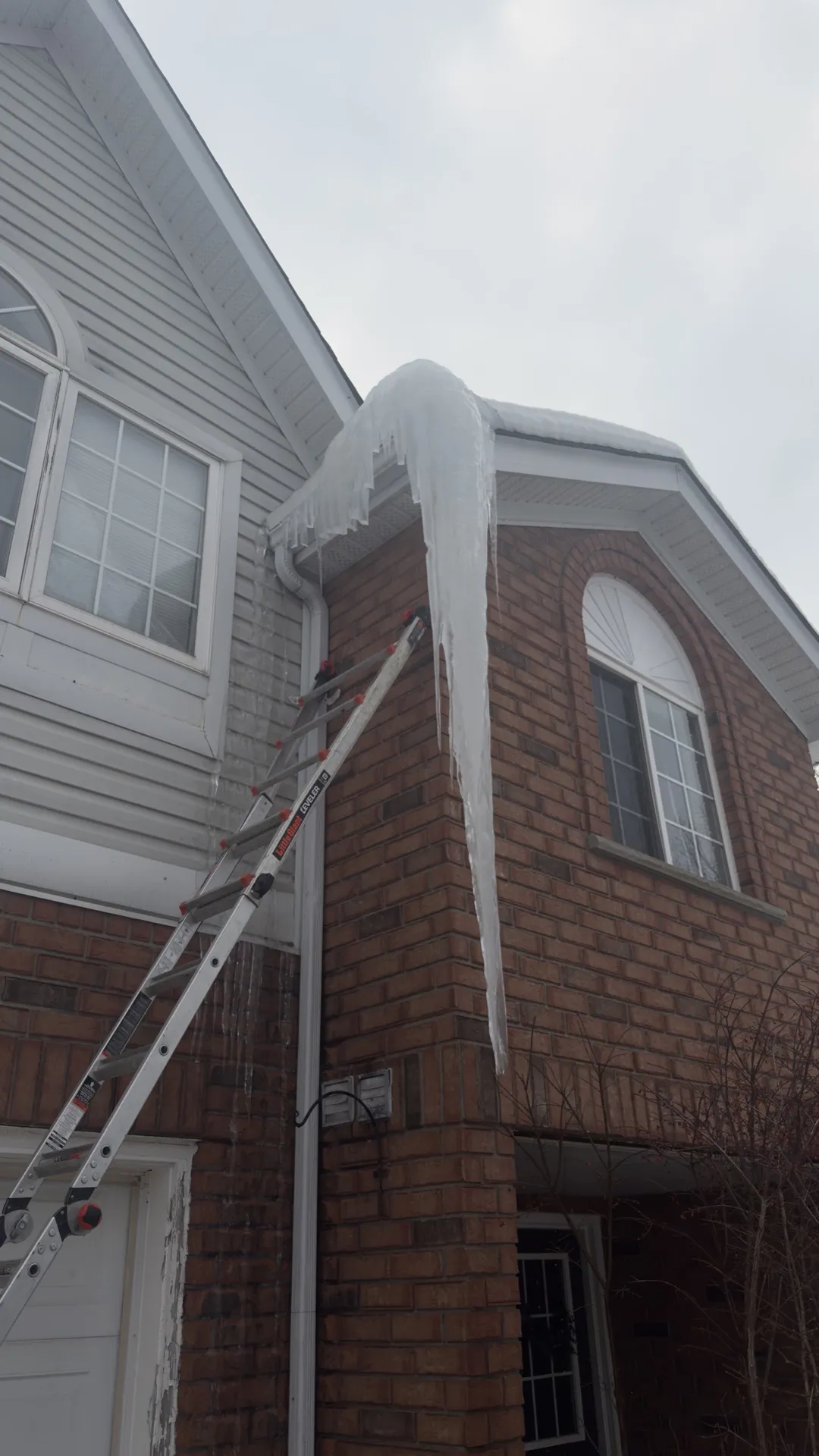
Canadian winters don't just bring cold, they bring a sustained assault on every surface of your home. Ice, snow, road salt, freeze-thaw cycles, and persistent moisture combine to damage gutters, siding, driveways, windows, and foundations over months. In Kitchener-Waterloo, preparation isn't optional. Here's exactly what to do, and when, to protect your home before winter arrives.
In This Article
- Understanding Ontario's Winter Threats to Your Home
- Gutter and Drainage Preparation
- Foundation and Grading: Keeping Water Away from Your Home's Base
- Windows and Sealing: Your Thermal Envelope
- Driveway Preparation: Seal Before It's Too Late
- Roof Inspection: Your Last Line of Defence Against Ice Dams
- Creating a Winter Prep Timeline: September to November
Understanding Ontario's Winter Threats to Your Home
Southern Ontario winters are deceptively dangerous for home exteriors. Unlike the deep cold of northern Canada, where temperatures stay consistently below freezing, Kitchener-Waterloo experiences what engineers call "marginal" winter conditions: temperatures that repeatedly cycle above and below the freezing point. The region averages over 60 freeze-thaw cycles per winter season, making it one of the more destructive winter environments for building materials in the country.
Each freeze-thaw cycle forces water to expand and contract inside every pore, crack, and gap in your home's exterior. Concrete cracks from the inside. Mortar joints crumble. Caulk separates from window frames. Asphalt driveways develop new fractures. Gutters separate at joints. Multiply this process 60 times over a winter, and the cumulative damage is enormous.
The major winter threats facing KW homeowners include:
- Ice dams: Caused by heat escaping through the roof, melting snow that refreezes at the eaves. Ice dams force water under shingles and into your attic. Clogged gutters dramatically worsen ice dam formation.
- Foundation heave: Saturated soil that freezes can expand and push against your foundation. Proper drainage and grading in fall significantly reduces this risk.
- Road salt corrosion: Sodium chloride spray from plowed roads attacks concrete driveways, walkways, and even the lower courses of brick veneer. A sealed driveway provides significant protection.
- Wind-driven moisture: Ontario winter storms push wet snow and ice into every gap in your building envelope. Failed caulking around windows and doors becomes a water infiltration point.
- Fascia and soffit rot: Overflow from clogged gutters saturates wood fascia repeatedly over winter, leading to rot that requires expensive replacement in spring.
Pro Tip: The week after the first significant snowfall in November is when most homeowners first notice problems that could have been prevented in October. Do your walkthrough now, not after the first ice storm.
Gutter and Drainage Preparation
Gutter preparation is the single most protective thing you can do before a Kitchener-Waterloo winter. Properly functioning gutters control where winter melt goes, directing it away from your foundation, fascia, and landscaping. Clogged gutters cause that water to go somewhere it shouldn't.
Fall gutter cleaning timing: Time your gutter cleaning for mid-to-late November, after the majority of local deciduous trees have shed their leaves. In the KW region, peak leaf drop typically occurs between October 25 and November 10. Cleaning gutters before this window means you'll need to clean them again. Cleaning them after ensures they're clear going into the freeze-up period.
If your home is surrounded by heavy tree coverage, consider having gutters cleaned twice: once in early October to handle the initial fall, and again in mid-November for the stragglers. This is particularly important for homes near silver maple, oak, and Norway maple trees, which are common in Kitchener-Waterloo subdivisions and drop leaves late in the season.
Downspout extensions: Every downspout should discharge at least 4-6 feet from your foundation wall. This is non-negotiable. A downspout that terminates at the foundation wall deposits hundreds of litres of water directly at the most vulnerable point of your home during every rain event and snowmelt. Rigid aluminum downspout extensions are inexpensive and available at any building supply store. They're one of the highest-ROI improvements you can make.
Check that underground downspout extensions, buried pipes that carry water to the street or a catch basin, are not clogged. These can be tested by running a hose down the downspout and confirming water exits at the other end. A blocked underground drain can direct significant volumes of water directly to your foundation during winter melt events.
For long-term protection, consider having gutter guards installed before winter. Quality gutter guards keep leaves and debris out while allowing water to flow freely, virtually eliminating the freeze-and-overflow problem that causes ice dams and fascia damage.
Need a hand with your home's exterior?
From gutters and windows to full exterior washes, we help homeowners across Kitchener, Waterloo, Cambridge & Guelph. Free, no-obligation quotes, ready within 1 business day.
Foundation and Grading: Keeping Water Away from Your Home's Base
Your home's foundation is its most expensive and most vulnerable structural element. Protecting it from winter water infiltration is a fall priority that pays dividends for decades.
The fundamental principle is simple: water must flow away from your foundation in every direction. The standard requirement is a slope of at least 6 inches over the first 10 feet from the foundation. Many homes, particularly those 15-30 years old, have settled soil that has reduced or reversed this slope, creating a bowl effect that channels water toward the foundation during rain and snowmelt.
Walk your property perimeter after a heavy rain in September or October and photograph any areas where water pools within 10 feet of the foundation. These areas need attention before freeze-up. Solutions range from simple topsoil addition (for minor settling) to swale installation or foundation waterproofing for more serious issues.
Window wells: If your home has basement windows with window wells, ensure the drainage gravel at the bottom is clear and the drain is functional. Blocked window well drains are a common and surprisingly damaging source of basement water infiltration in winter.
Windows and Sealing: Your Thermal Envelope
Your windows, doors, and the caulking around them form what building scientists call your "thermal envelope", the continuous barrier between your heated interior and the winter cold. Any gap in this envelope costs you money in heating bills every hour of every winter day.
In October, inspect every exterior window and door from the outside. Look specifically for:
- Caulk that has cracked, shrunk, or pulled away from the frame on either side
- Missing caulk in corners or at the intersection of different materials (wood to brick, vinyl to stucco)
- Fogged or condensation-filled double-pane windows (indicating failed seals that reduce insulation value)
- Door sweeps that no longer contact the threshold when the door is closed
- Gaps in weatherstripping around door frames
Re-caulking is a straightforward DIY task for most homeowners, but it must be done while temperatures are above 5°C for proper cure. Silicone caulk is the best choice for exterior window and door perimeters, it remains flexible at -40°C, doesn't shrink, and is waterproof. For painted wood trim, use a paintable silicone or siliconized latex product.
"Failed caulking around windows accounts for a huge percentage of the heat loss and moisture damage we see every spring. It takes an hour to walk the house with a tube of caulk in October. It takes thousands of dollars to fix the damage if you don't."
- Devon, D&D Home Services Founder
Driveway Preparation: Seal Before It's Too Late
Ontario's combination of road salt, freeze-thaw cycling, and heavy precipitation is particularly destructive to asphalt driveways. An unsealed driveway can deteriorate significantly in a single winter; a properly sealed and maintained driveway can last 20-30 years with regular care.
The hard deadline for driveway sealing in Ontario is approximately October 1-15. Asphalt sealer requires:
- Air and pavement temperature above 10°C during application
- No rain forecast for at least 24-48 hours after application
- Sustained warm temperatures for the cure period
Trying to seal an asphalt driveway in late October in Kitchener-Waterloo is risky, nighttime temperatures frequently drop below 10°C, and the sealer may not cure properly, resulting in a surface that peels or washes off before providing any protection. If you've missed the sealing window, the most important thing you can do is fill any existing cracks with a cold-weather crack filler to prevent water infiltration and freeze expansion through winter.
New asphalt driveways should wait 12 months before first sealing. Over-sealing (more than every 2-3 years) can cause the sealer to build up, crack, and peel. Learn more about our professional driveway sealing service and optimal timing for Kitchener-Waterloo homeowners.
Roof Inspection: Your Last Line of Defence Against Ice Dams
A visual roof inspection in September or October, before the first snow, can prevent costly water damage. You don't need to climb on the roof; use binoculars from the ground and look for:
- Missing, cracked, or curling shingles
- Exposed nail heads or lifted flashing around chimneys, vents, and skylights
- Sagging areas that might indicate sheathing damage
- Granule loss (look for granules accumulating in gutters)
- Damaged or missing ridge cap shingles
Any shingle damage discovered in fall should be repaired before winter. A missing shingle that admits water in November creates a freeze-thaw cycle inside your roof deck that compounds through the entire winter. Addressing it in October is a simple shingle replacement; addressing it in May after months of moisture damage may require sheathing and insulation replacement.
Ice dam prevention starts with attic insulation and ventilation. If you've had ice dams in previous winters, a professional assessment of your attic insulation, ideally done in fall, can identify where heat is escaping through your roof deck and address it before the next ice dam season.
Creating a Winter Prep Timeline: September to November
The most effective approach to winter preparation is a phased timeline, different tasks have different weather-dependent deadlines, and spreading the work across three months prevents the October scramble most homeowners experience.
| Month | Priority Tasks | Why This Timing |
|---|---|---|
| September | Roof visual inspection, attic check, grade and drainage assessment, window seal check, book professional services | Still warm; time to arrange contractors before peak season; identify issues that need repair before freeze-up |
| Early October | Driveway sealing (last chance), re-caulking windows and doors, pressure wash siding and walkways, exterior hose storage, outdoor furniture storage | Above 10°C guaranteed; caulk and sealer cure properly; pressure washing effective before cold |
| Late October | Grade topping and repairs, window well cleaning, downspout extension installation/check, door sweep replacement | Ground still workable; before sustained freezing |
| Early November | Gutter and eavestrough cleaning (after peak leaf drop), downspout flushing, final drainage check | After most leaves have fallen; before gutters freeze; ideal window for KW region |
| Late November | Snow removal service confirmation, ice melt stock, exterior light check, final walk-around | Before first significant snowfall; ensure all systems ready |
Canadian Winter Prep, Key Takeaways
- ✓ Freeze-thaw cycles are your enemy: KW averages 60+ per winter, every crack and gap gets worse with each cycle.
- ✓ Gutter cleaning in mid-November: After peak leaf fall, before gutters freeze. This is the single most protective task.
- ✓ Downspout extensions are essential: 4-6 feet minimum discharge from foundation, no exceptions.
- ✓ Driveway sealing deadline is October 1-15: After that, temperatures don't support proper cure.
- ✓ Walk the house with caulk in October: Re-caulk any gap around windows and doors before the cold arrives.
- ✓ Book professionals in September: Peak demand is October-November, the best companies fill up fast.

Request a home-service quote
Select the service you need and describe the work area and access.