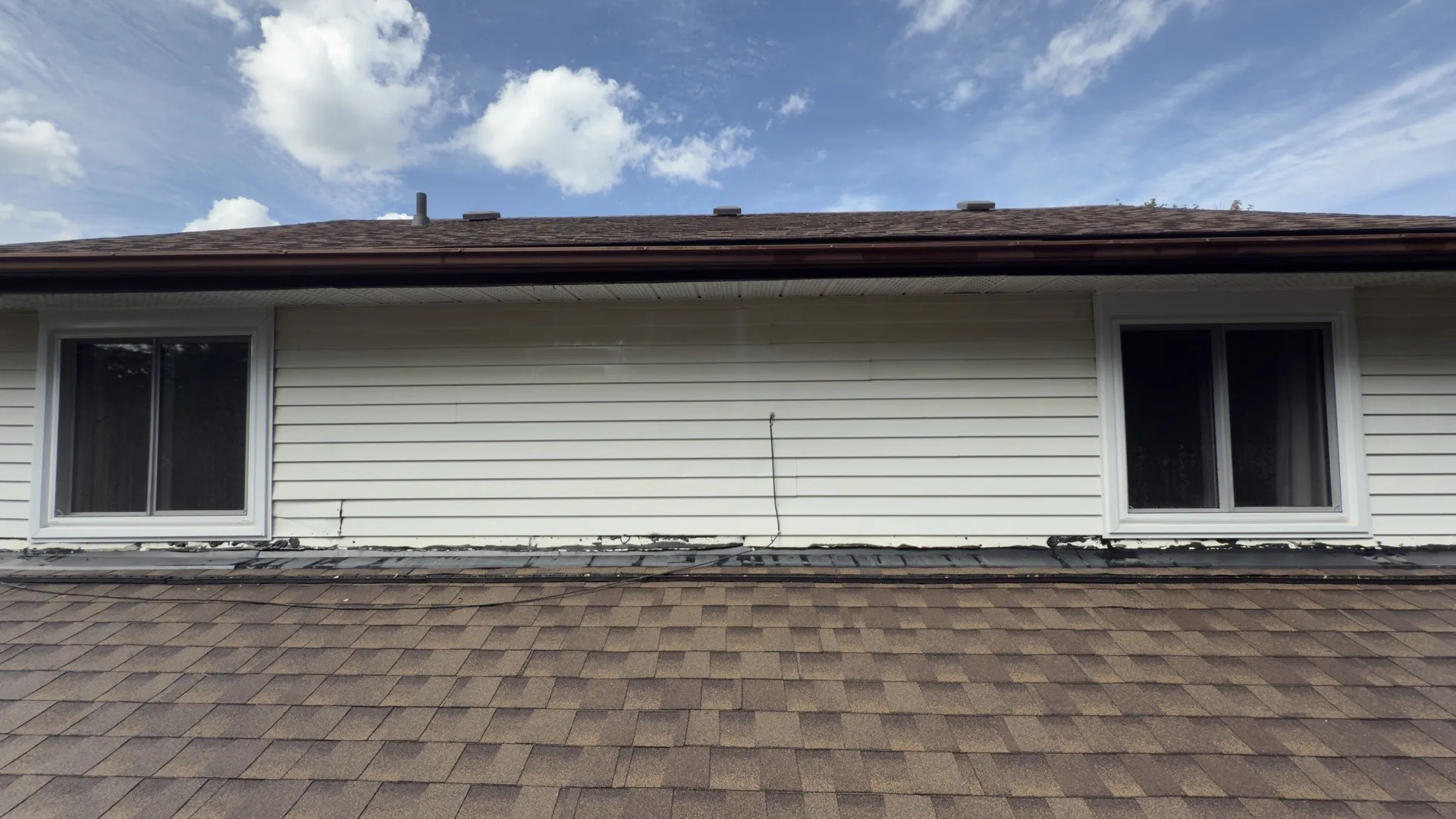
Vinyl siding was sold to generations of homeowners as maintenance-free. That was never entirely true. While it doesn't rot or peel like wood, vinyl siding accumulates grime, algae, and a chalky oxidation film over time that dulls its appearance and accelerates deterioration. Here's the complete guide to keeping yours clean, with Ontario-specific advice.
In This Article
Why Vinyl Siding Gets Dirty in Ontario
Ontario's climate creates a particular combination of factors that leads to vinyl siding looking tired and stained years before it should:
Road spray and traffic pollution: Kitchener-Waterloo's road crews apply significant quantities of calcium chloride, magnesium chloride, and road salt throughout the winter. By February, the entire ground level of your home's exterior may be coated in a salty white film from road spray, particularly homes near busy streets. This salt film attracts dirt and accelerates the conditions for algae growth.
Oxidation: Vinyl oxidizes when exposed to UV radiation over time. The surface develops a chalky, dull film, similar to the chalk on old exterior paint. This is the pigment breaking down and releasing to the surface. Oxidized vinyl looks permanently dirty even after rinsing because the chalk is part of the surface, not sitting on top of it. Homes with vinyl siding from the 1990s and early 2000s commonly have significant oxidation.
Algae and mildew: Ontario's humid summers and wet falls provide ideal growing conditions for green algae and black mildew on any surface that doesn't receive regular cleaning. North-facing siding and areas under dense tree canopy are most affected.
Spider webs and insect debris: A less dramatic but common complaint, webs, wasp nests in corners and under eaves, and insect debris accumulate year-round and are particularly visible on lighter-coloured siding.
Gutter overflow staining: Clogged or overflowing gutters deposit dirty water down the siding face, creating vertical streaks that become permanent-looking stains over multiple seasons.
Safe Cleaners for Vinyl Siding
Vinyl siding is chemically resistant to most household cleaning products, but some chemicals can damage the surface, fade colour, or leave residues. Here's what works and what to avoid:
| Cleaner | Effective For | Safe? |
|---|---|---|
| Dish soap + water | Light grime, general cleaning | Yes |
| TSP substitute (phosphate-free) | Heavy grime, grease | Yes (rinse well) |
| Dilute bleach (1–3%) | Algae, mould, mildew | Yes (test dark colours first) |
| White vinegar | Light stains, mildew | Yes |
| Specialty vinyl siding cleaner | All-purpose | Yes |
| Acetone / paint thinner | N/A | No, damages vinyl |
| Undiluted bleach | N/A | No, can fade colour |
| Abrasive scrubbers | N/A | No, scratches surface |
| Organic solvents | N/A | No, dissolves vinyl |
For most routine cleaning, a simple solution of dish soap (or a TSP substitute) mixed in a bucket of warm water is entirely adequate. For biological growth (algae, mildew), add diluted sodium hypochlorite to the solution. The professional soft washing approach combines a diluted bleach solution with a surfactant for maximum effectiveness with a single application.
Always test any cleaning solution in an inconspicuous area of darker-coloured vinyl before applying broadly. Although vinyl is generally bleach-resistant, the dyes in some colours (particularly deep reds and blues) can be sensitive to concentrated bleach.
Black streaks creeping across your siding?
Our low-pressure soft wash removes algae, mould and black streaks without damaging your siding. Free, no-obligation quotes across Kitchener, Waterloo, Cambridge & Guelph, ready within 1 business day.
The Top-Down Technique: Direction Matters
The direction you apply cleaner and rinse siding makes a significant difference in the quality of results. The professional approach:
Always clean and rinse from top to bottom. Working top to bottom ensures that dirty rinse water and cleaning solution runs off the clean section below as you move down, rather than dripping down onto sections you've already cleaned and leaving new streaks.
The critical exception: if you're using a soft wash chemical application, apply the solution bottom to top, then rinse top to bottom. Bottom-up application prevents clean solution from running down dirty sections before it has a chance to work. This is a nuance that matters more on heavily soiled surfaces than on routine maintenance washes.
Never spray water or cleaning solution upward under the siding panels. This is the most important rule for vinyl siding cleaning. Vinyl siding has an open channel at the bottom of each panel where the panels overlap. Spraying upward directs water behind the panel, into the wall cavity. This is how vinyl siding cleaning causes water infiltration, insulation damage, and eventually mould in the wall.
This rule applies to both pressure washers and garden hoses. The angle of spray must always be horizontal or slightly downward, never upward into the panels. Keep any pressure washer wand pointing downward, and be particularly careful at the edges of the siding where the profile makes an upward angle tempting.
Pro Tip: Before cleaning, check all your siding for any panels that have come unclipped or have a broken locking edge. These gaps allow water infiltration during cleaning and need to be re-clipped or replaced before washing.
Removing Oxidation: The Chalky Film Problem
Oxidation (the chalky surface film on older vinyl siding) is one of the most common complaints we hear from homeowners with siding more than 15–20 years old. Standard cleaning solutions remove surface dirt but don't restore the surface of oxidized vinyl, the chalk is part of the surface material.
How to identify oxidation: Run your finger firmly across the siding surface. If white or grey chalky residue transfers to your finger, you have significant oxidation. Light oxidation may not be immediately visible but will appear as a haze after cleaning, when you expect the surface to look bright and clean.
Approaches for oxidized vinyl:
- Specialty vinyl restorer products (Meguiar's, 303 Aerospace, or products marketed as vinyl cleaner/restorer) contain mild abrasives and UV stabilizers that physically remove the oxidized surface layer and restore some sheen. Apply with a soft cloth, work in small sections, wipe off residue.
- Soft brush mechanical cleaning: A long-handled soft-bristled brush combined with a cleaning solution can physically remove oxidation from sections that haven't oxidized deeply. Use circular or back-and-forth motions, not up-and-down (which can drive water under panels).
- Acceptance: Severely oxidized vinyl (20+ years of UV degradation) may not restore well. At some point, the surface degradation is deep enough that cosmetic restoration is limited. This is one of the signs that siding replacement should be considered.
Professional soft washing significantly helps oxidation by removing the loose chalk layer and associated grime. It won't eliminate deep oxidation but dramatically improves the appearance of moderately oxidized siding.
Avoiding Streaks: Common Causes and Fixes
Streaking after cleaning vinyl siding is one of the most common and frustrating results of a DIY cleaning effort. Here's why it happens and how to prevent it:
Cause 1, Cleaning solution drying before rinsing: When you apply cleaning solution to hot siding in direct sunlight, it can dry before you've had time to rinse it. The dried residue leaves streaks. Fix: Work in sections small enough that you can rinse before the solution dries. On a hot summer day, work in the shade of the house and avoid cleaning sections in direct midday sun.
Cause 2, Dirty rinse water running down: If you rinse from bottom to top (incorrect) or in sections without overlapping, dirty water from above runs over sections you've already cleaned. Fix: Always rinse top to bottom in continuous sweeping passes.
Cause 3, Hard water spots: Kitchener-Waterloo has moderately hard water. Rinsing with hard water and allowing it to dry on vinyl can leave mineral deposits. Fix: Work on overcast days when the sun won't dry the siding immediately, or wipe down sections with a microfiber cloth after rinsing.
Cause 4, Residual cleaning solution: Not rinsing thoroughly enough leaves cleaning product residue that streaks as it dries. Fix: After cleaning, make a complete second pass with fresh water for a thorough final rinse.
"The most common DIY vinyl siding mistake we see in Kitchener is spraying upward under the panels to try to clean the overlap edges. That water goes straight into the wall. Always spray downward."
- Devon, D&D Home Services Founder
DIY vs. Professional: When Each Makes Sense
Vinyl siding cleaning is one of the more DIY-accessible exterior cleaning tasks for single-storey homes. With a garden hose, a bucket of cleaning solution, and a long-handled soft brush, a motivated homeowner can clean the ground-level siding on a bungalow in an afternoon.
However, professional soft washing makes more sense in these situations:
- Two-storey homes: Safely reaching upper siding sections requires a pressure washer with an appropriate wand, proper ladder positioning, or a dedicated extension wand. Falls from ladders during siding cleaning are common, professional equipment and training significantly reduce this risk.
- Significant algae or mould: Heavy biological growth requires the right chemical application and dwell time to be fully eliminated. Rinsing visible algae just relocates it.
- Oxidized siding: Professional equipment and technique can remove more oxidation than a bucket and brush.
- Large homes: The labour investment of manually cleaning a large home's siding is considerable, a professional soft wash is often more cost-effective than the time investment for DIY.
- Pre-listing cleaning: For homes being prepared for sale, professional cleaning ensures the best possible result for photography and showings.
Cleaning Frequency for Ontario Homes
How often should you clean vinyl siding? The answer depends on your home's specific conditions, but general guidelines for Ontario:
- Homes with significant tree cover or north-facing sections: Annual cleaning. Shaded, moist conditions accelerate algae growth.
- Average suburban home with reasonable sun exposure: Every 1–2 years for full professional cleaning, with a rinse-down in spring to remove road salt.
- Homes near busy roads: Annual cleaning. Road spray accumulation is significant and accelerates grime buildup.
- Homes with older (15+ year) siding: Annual cleaning helps slow oxidation progression and keeps the surface looking presentable.
Our soft washing service is typically 1–2 hours for a standard Kitchener-Waterloo home, and results last significantly longer than a basic rinse, because the biological growth is eliminated chemically rather than just rinsed away.
Key Takeaways
- ✓ Never spray upward under vinyl siding panels - water infiltrates the wall cavity and causes mould
- ✓ Always clean and rinse top to bottom to avoid streaking from dirty runoff
- ✓ Diluted bleach (1–3%) safely kills algae and mildew - test dark colours in a hidden spot first
- ✓ Oxidation (chalky film) requires specialty restorer products - standard cleaners don't remove it
- ✓ Avoid acetone, paint thinner, and undiluted bleach - these damage vinyl surfaces
- ✓ Annual cleaning is appropriate for most Ontario homes; shaded or road-adjacent homes may need more frequent attention

Request a home-service quote
Select the service you need and describe the work area and access.